How Much Does Custom Loungewear Cost per Bulk Order
Budget a custom loungewear manufacturer by splitting fabric, make, and FOB — not a single headline price. A realistic bulk price builds from fabric, GSM, the 1,000 pcs/style/color MOQ, and FOB Shenzhen.
- Split the quote: fabric, make, and FOB move cost independently — ask for line items.
- MOQ sets the floor: 1,000 pcs/style/color keeps standards consistent.
- Quote the whole run: sampling, trim, shipping change landed cost — lock reorders.
Bottom line: the cheapest unit price is rarely the cheapest landed cost — so a low-price loungewear manufacturer must still itemize every line, not just a low number.
- 01Why Bulk Loungewear Pricing Is Hard to Quote Up Front
- 02The Biggest Cost Driver: Fabric Composition and GSM
- 03How the 1,000 pcs/Style/Color MOQ Shapes Unit Cost
- 04Printing, Embroidery, and Trim Add Up
- 05Sampling Cost Before Bulk
- 06FOB Shenzhen and What It Does (and Doesn't) Include
- 07A Realistic Bulk Order Pricing Breakdown
- 08Hidden Costs Buyers Forget
- 09How to Request an Accurate Quote from a Loungewear Manufacturer
- 10Volume Pricing: When More Units Lowers Cost
- 11Why Brands Trust MinCharm's Bulk Order Pricing
- 12FAQ
Why Bulk Loungewear Pricing Is Hard to Quote Up Front
A "how much per piece" question sounds simple, but loungewear is a stack of variables — fabric weight, composition, print method, trim, and shipping terms all move the number. The mistake buyers make is comparing one supplier's headline price to another's without opening the line items. Before you judge a custom loungewear manufacturer on cost, understand what actually sits inside the quote.
This guide breaks the loungewear cost stack into the pieces you can control: fabric and GSM, the 1,000 pcs/style/color MOQ, printing and embroidery, sampling, and FOB Shenzhen trade terms. It pairs with our evaluation and OEM-model guides so price sits next to quality, not instead of it.
The Biggest Cost Driver: Fabric Composition and GSM
Fabric is usually the largest single line in loungewear cost, and within fabric, two numbers dominate: composition (cotton, polyester, rayon, or blends) and GSM (grams per square meter, i.e. fabric weight). A 180 GSM French terry costs more than a 140 GSM jersey; a combed-cotton face costs more than carded. These choices also decide hand-feel and drape — the things loungewear buyers repurchase on.
MinCharm sets fabric composition and GSM to your Tech Pack and re-verifies on bulk fabric, so the cost you approve is the cost you receive. Specifying early is also how you avoid a late "we substituted to hit price" surprise that quietly changes the product.
How the 1,000 pcs/Style/Color MOQ Shapes Unit Cost
Minimum order quantity is not just a gate — it is a cost lever. MinCharm's standard is 1,000 pcs per style/color. Below that, fabric mills and trim suppliers charge setup premiums that push your unit cost up; at and above it, material and process costs stabilize. The MOQ is also what protects the material acceptance standard across the run — order volume changes rhythm, not the bar we measure against.
If you are testing a new style, plan the 1,000 pcs/color as a true first run rather than splitting 300 here and 300 there; the split almost always costs more per piece and complicates reorder consistency.
Printing, Embroidery, and Trim Add Up
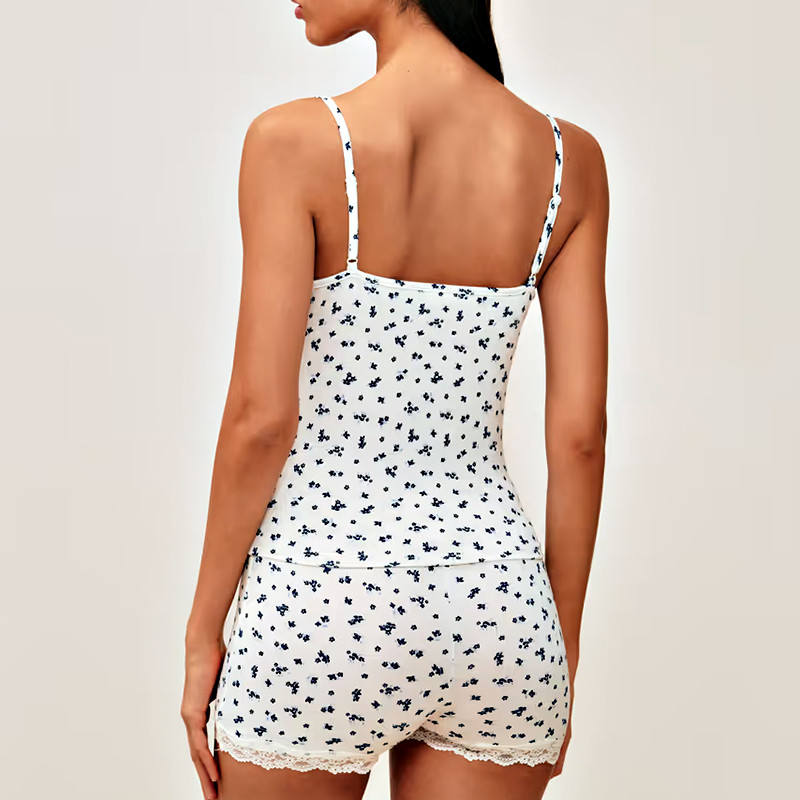
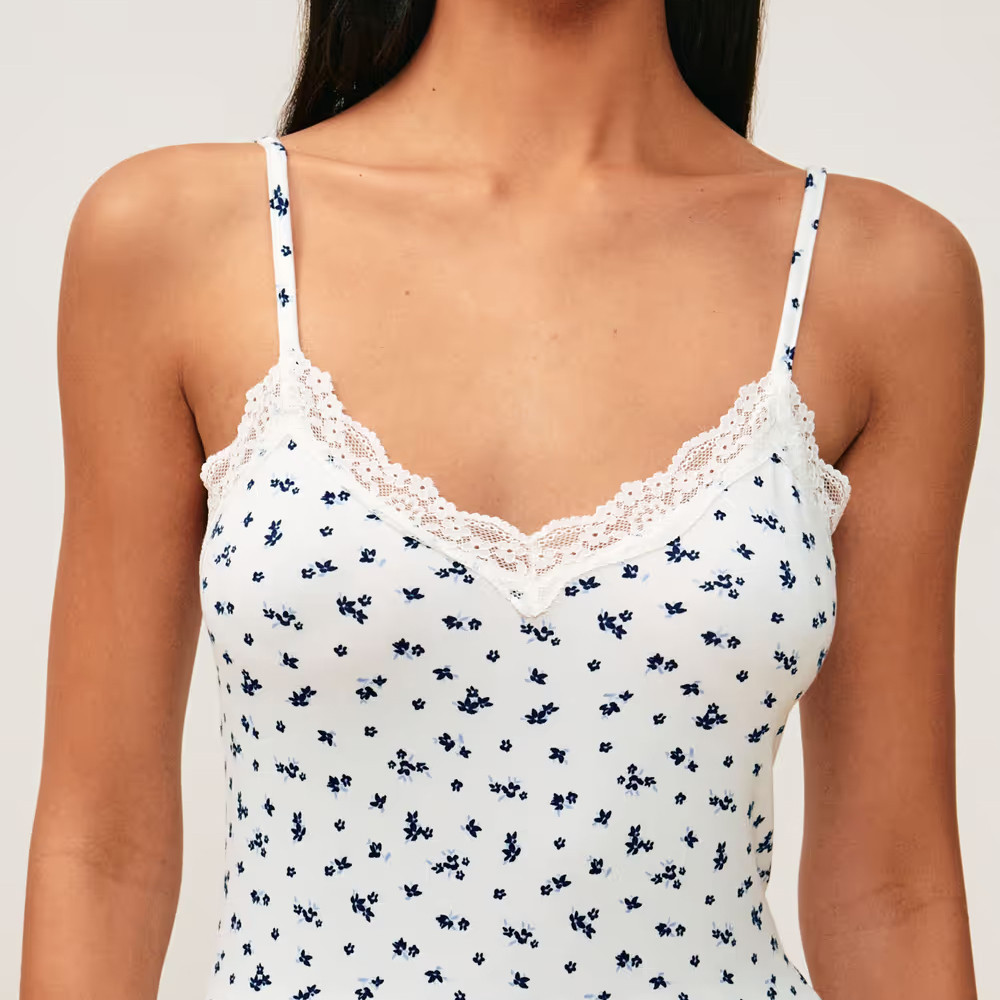
Surface decoration and trims are where bulk order pricing drifts if no one itemizes them. A small chest print, an all-over floral, and tonal embroidery sit in different cost bands; lace trim, custom labels, and gift packaging each add a line. None is large alone, but together they can move the unit price as much as a GSM step.
| Decoration | Cost behavior | When it pays off |
|---|---|---|
| Screen print (small) | Low per unit at volume | Simple logo, 1–2 colors |
| All-over print | Higher, fabric-length based | Statement loungewear looks |
| Embroidery | Stitch-count based | Premium, durable branding |
| Lace / custom trim | Per-meter plus attach | Differentiated sets |
Ask for these as separate lines so you can trade one for another without re-quoting the whole garment — that is how a brand tunes price without silently dropping quality.
Sampling Cost Before Bulk
Sampling is the cheapest insurance in the whole project, and it is a real line in bulk order pricing — not free. MinCharm's standard sampling takes 7–10 days; the sampling fee is typically deductible or refundable once bulk reaches the agreed volume. Treat the proto and golden sample as the acceptance baseline: paying for them now prevents paying for a wrong bulk later.
Budget sampling as its own step, not an afterthought. A disciplined sample loop (proto, golden sample, PP sample) is what lets the bulk price mean something, because you are quoting against a confirmed reference, not a guess.
FOB Shenzhen and What It Does (and Doesn't) Include
MinCharm quotes FOB Shenzhen (Shenzhen, China) — the price covers goods delivered to the Shenzhen port, with booking and insurance following FOB practice and defined in the contract. What it does not include is ocean freight, destination duties, and last-mile delivery; those are your forwarder's lines, not the factory's.
Why FOB matters for cost clarity: a FOB quote is comparable across suppliers because everyone quotes to the same hand-off point. Comparing a FOB quote to a "landed at your door" quote is how buyers misread price by 20–40%. Tell us your forwarder or destination port at inquiry and we coordinate the rest.
For a true loungewear cost comparison, always normalize to the same trade term — FOB to FOB, or landed to landed — before you decide.
A Realistic Bulk Order Pricing Breakdown
A transparent quote reads top to bottom. Using MinCharm's real anchors, a typical custom loungewear bulk run builds like this:
MinCharm's indicative FOB starts from US$2 — a factory-direct low price sustained by our own 600,000 pcs/month capacity and bulk fabric sourcing, not by cutting the material standard. The number only means something once every line above is stated.
Hidden Costs Buyers Forget
The gap between a headline price and a landed cost is where budgets break. Watch these:
- Reorder variance: if the second run uses different fabric, the "savings" show up as returns, not on the invoice.
- Testing and certs: OEKO-TEX or GRS documentation for your market can carry a line — budget it, don't discover it at customs.
- Packaging: custom boxes and inserts are a real per-unit cost often quoted separately.
- Payment float: MinCharm typically works 50% deposit, balance before shipment — plan cash flow, not just unit cost.
None of these is a trap if it is on the quote. The risk is the line that is missing, because a missing line is a cost someone absorbs later — usually you.
How to Request an Accurate Quote from a Loungewear Manufacturer
You get a usable loungewear cost by sending a usable brief. A loungewear manufacturer can quote tightly only when the variables are named:
- Tech Pack: composition, GSM, size chart, construction, and trim specified — not "make it soft."
- Order shape: styles × colors × quantities, so the MOQ effect is real, not assumed.
- Decoration: print/embroidery placement and count per piece.
- Trade term: FOB Shenzhen (or your preference) stated, so freight isn't guessed.
- Market certs: OEKO-TEX / GRS / BSCI / ISO 9001 scope you need, named up front.
- Target price band: a range helps the supplier tune fabric and decoration to hit it.
Volume Pricing: When More Units Lowers Cost
Volume pricing is real but stepped, not linear. Crossing the 1,000 pcs/style/color MOQ is the first drop; further steps come from fabric-mill volume breaks and trim-buy consolidation. The discipline that actually protects your price, though, is reorder consistency: locking fabric and hand across repeats so you are not re-quoting — and re-risking — every season.
Plan reorders as continuations, not new projects. A supplier who reproduces the golden sample on the same fabric and hand is one whose bulk order pricing you can predict a year out — which is worth more than a one-time discount.
Why Buyers Trust MinCharm as Their Loungewear Manufacturer
Transparent pricing is a system, not a slogan. MinCharm's cost clarity rests on verifiable facts a buyer can check before the PO:
- Itemized quotes: fabric, make, decoration, sampling, and FOB Shenzhen as separate lines — tune one without re-quoting all.
- Real own capacity: 11,000 ㎡ factory, 200+ workers, up to 600,000 pcs/month — scale that supports stable unit cost in peak and off-season.
- Low price loungewear manufacturer: as an own-factory loungewear manufacturer, not a trading middleman, MinCharm returns mill and process margins to you — the US$2 indicative FOB reflects factory-direct pricing, not a resale markup, so low price comes from structure, not from cutting the material standard.
- MOQ that protects standard: 1,000 pcs/style/color holds the material acceptance bar, so price cuts don't become quality cuts.
- Traceable compliance: OEKO-TEX / BSCI / GRS / ISO 9001 via selected partner factories per project.
- Predictable terms: FOB Shenzhen, 50% deposit / balance before shipment, sampling deductible at volume.
To compare suppliers on real numbers, start from our Custom Loungewear Manufacturer service page.
About MinCharm's Loungewear Production Line
MinCharm has developed and manufactured apparel in Dongguan (Guangdong) since 2014, with its own factory plus a Specialized Manufacturing Network for collaborative capacity. On loungewear, we execute your Tech Pack to the golden sample, setting fabric composition, GSM, and pattern to your spec and re-verifying on bulk fabric — so the loungewear cost you approve is the cost you receive.
As a factory-direct loungewear manufacturer with our own Dongguan plant, MinCharm offers low-price custom loungewear built on scale (up to 600,000 pcs/month) and bulk fabric sourcing — low price stays paired with the material standard, never traded away from it.
For buyers planning to scale, our Loungewear Sourcing Guide notes: the 1,000 pcs/style/color standard minimum maintains the material acceptance standard — order volume changes production rhythm, not the standard we measure against. Content compiled by the MinCharm content team for brand and sourcing decision reference.
What is the minimum order for custom loungewear?
MinCharm's standard is 1,000 pcs per style/color. This MOQ stabilizes fabric and process costs and holds the material acceptance standard across the run; below it, mill and trim setup premiums push the unit cost up. Plan each color as a full first run rather than splitting small quantities across many colors.
How much does sampling cost before bulk?
Sampling is a real line in bulk order pricing, not free. MinCharm's standard sampling takes 7–10 days, and the sampling fee is typically deductible or refundable once bulk reaches the agreed volume. Treat the proto and golden sample as the written acceptance baseline — paying for them now prevents paying for a wrong bulk later.
Does a higher GSM always cost more?
Generally yes within the same composition: a 180 GSM French terry costs more than a 140 GSM jersey because it uses more fiber and often a more complex knit. But GSM is only one axis — composition (combed vs carded cotton, rayon blend) and finish matter too. Specifying both lets a supplier tune loungewear cost without silently dropping hand-feel.
What does FOB Shenzhen include in the price?
FOB Shenzhen means the quoted price covers goods delivered to the Shenzhen port, with booking and insurance following FOB practice and defined in the contract. It does not include ocean freight, destination duties, or last-mile delivery — those are your forwarder's lines. Always compare quotes on the same trade term to read true loungewear cost.
How can I lower my bulk unit cost?
Three real levers: hold or exceed the 1,000 pcs/style/color MOQ to capture material stability, consolidate trim buys across styles, and tune decoration (e.g. small screen print vs all-over) to budget. The steadiest saving, though, is reorder consistency — locking fabric and hand so you avoid re-quoting and re-risking every season.
Are there hidden costs in custom loungewear manufacturing?
The costs aren't hidden if they're on the quote — the risk is the missing line. Watch reorder variance (different fabric = returns), market certs (OEKO-TEX/GRS documentation), custom packaging, and payment float (50% deposit, balance before shipment). Ask for every line itemized so landed cost is known before you commit.
How do I get an accurate quote from a loungewear manufacturer?
Send a complete brief: Tech Pack (composition, GSM, size chart, construction, trim), order shape (styles × colors × quantities), decoration placement and count, trade term (FOB Shenzhen), required certs, and a target price band. A loungewear manufacturer quotes tightly only when the variables are named — a vague "make it soft" produces a vague, risky number.
Can pricing be locked across reorders?
Yes, and it is the most valuable form of cost control. MinCharm reproduces the confirmed golden sample on the same fabric and hand, and flags any material change before cutting the repeat run. Locking fabric, trim, and FOB Shenzhen terms in writing keeps your bulk order pricing predictable across seasons rather than re-quoted each time.
Before your next bulk order, send MinCharm your Tech Pack and let us return an itemized, factory-direct low-price loungewear cost — fabric, make, decoration, sampling, and FOB Shenzhen as separate lines — so the price you approve is the price you receive, reorder after reorder.
Request a QuoteContact: Tel +86 13712870144 | WhatsApp 8613712870144 | Address: No.2 Road of Industrial Zone 12, Dongguan City, Guangdong Province, China