How to Choose a Custom Loungewear Manufacturer
Choose a custom loungewear manufacturer by confirming real production, then matching MOQ, QC, and lead times to your order — not just the cheapest quote.
- Verify the factory: request an on-site or live audit to confirm they own production lines.
- Match MOQ to price: ultra-low unit prices usually come from scaled MOQs — understand the cause before judging the number.
- Confirm QC and timing: lock AQL 2.5 + 100% inspection in the contract, and plan 7–10 days sampling, 25–35 days bulk.
Bottom line: pick a manufacturer whose MOQ, QC, and lead times fit your order — not the one with the lowest headline price.
- 01Verify the Factory: Real Manufacturer or Trader
- 02MOQ 1,000 pcs: The Logic Behind Ultra-Low Pricing
- 03Business Model: OEM / ODM / Private Label
- 04How a Loungewear Manufacturer Chooses Fabrics
- 05Fit, Sizing & Patterns: Quantifying "Relaxed Comfort"
- 06Quality System: AQL 2.5 + 100% Inspection
- 07From Quote to Shipment: Sampling & Bulk
- 08Cost & FOB: Where the US$2 Starts
- 09Compliance & Certifications: Share Early
- 10Eight Common Pitfalls & Avoidance
- 11Why Brands Choose MinCharm as Their Loungewear Manufacturer
- 12FAQ
Verify the Factory: Real Manufacturer or Trader
Too many brands treat "find a loungewear manufacturer" as "find the lowest-priced supplier," and that framing alone hides 80% of the risk. What we actually handle on the production line is a different logic: most loungewear problems hide in places that "look about the same" — a dyelot color shift, weak cuff-rib rebound, misaligned prints, wrinkled seams. This article covers one thing: how to choose a custom loungewear manufacturer, from verifying the factory and reading the MOQ to selecting fabrics and writing acceptance standards into the contract.
Step one is always identity verification. The word "factory" is used too loosely in this industry: some companies own no production line at all yet present upstream factories' photos as their own capacity. For buyers, the way to tell is not complicated, but it must be done:
- Live or on-site factory audit: ask the supplier to walk you through the workshop, sewing lines, and inspection area in real time, not just send a few retouched photos.
- Ask "who owns this machine": a factory with real own capacity can state equipment counts, team sizes, and peak/off-season scheduling; traders tend to go vague on these details.
- Check accountability: when something goes wrong, does one person or company own it end to end, or do they push it to an "upstream factory"? The former is usually a real factory; the latter is mostly a middleman.
| Dimension | Trader / Middleman | Own Factory + Specialized Network |
|---|---|---|
| Pricing transparency | Often carries upstream markup; end cost opaque, hard to see where money goes | Core categories use own capacity for reliable lead times; cost structure is clear and controllable |
| Sampling / rush response | Relays layer by layer; one change bounces through 2–3 hands, slow | Direct line to production; revisions, rush, and reorders respond fast |
| QC standard | Set by upstream factory; hard for you to intervene or trace | One QC standard carried through bulk; records traceable |
| Accountability | Problems often pushed to "upstream factory"; blurry boundaries | One contact, one standard, clear accountability |
| Product breadth | Limited by partner factories' capacity and categories | Own lines plus network; from loungewear to knit shirts |
MinCharm runs an "Own Factory + Specialized Manufacturing Network" model — using own capacity to secure core-category lead times while leveraging the network to widen categories and peak capacity. For buyers, this means one contact and one QC standard, yet a broader product line. Whether you are looking for a loungewear factory or a private label loungewear partner, confirm whether they own production lines before discussing anything else.
MOQ 1,000 pcs: The Logic Behind Ultra-Low Pricing
This section is the core of the topic. Many buyers see 1,000 pcs / style / color and think "high minimum," but read together with MinCharm's product positioning, the conclusion flips: the 1,000-piece minimum is precisely the necessary precondition for pushing the price down to an ultra-low level like FOB from US$2.
MinCharm positions loungewear and knit basics in the extreme-value, ultra-low ex-factory price segment. This positioning is not a slogan; it is backed by a whole cost structure:
- Scaled capacity amortizes fixed costs: own factory 11,000 ㎡, 200+ workers, up to 600,000 pcs monthly. Setup, pattern-making, and minimum-dyelot costs are only negligible when amortized over large volumes.
- Long-term bulk fabric and trim sourcing: stable order volume lets the factory secure better batch prices from fabric, rib, and trim suppliers — savings that flow directly into the ex-factory price.
- Standardized processes cut waste: proven patterns and operations mean lower rework and tighter material use, lowering unit cost naturally.
| Comparison | Low-MOQ factory (e.g., 100–300 pcs) | 1,000-pcs scale factory (MinCharm model) |
|---|---|---|
| Unit price level | Fixed costs not amortized; unit price significantly higher | Scale amortizes fixed costs; unit price pushed into ultra-low range |
| Fabric / trim cost | Small-batch buying; no bulk price | Long-term bulk sourcing; clear batch-price advantage |
| Best for | Testing styles, niche customization, prototype-level needs | Volume orders from brands, retailers, and wholesalers |
| Price vs. MOQ | Low MOQ bought at the cost of "high unit price" | MOQ trades for "ultra-low unit price"; price and MOQ are two sides of one coin |
Price and MOQ are two sides of the same coin. The 1,000-piece minimum is not a wall keeping you out — it is the confidence behind our US$2-start price: larger volumes make dyelots, patterning, and scheduling far more efficient. Advice to buyers: split styles and colors by your real sales forecast, pilot with 1–2 core styles to validate quality and sell-through, then roll out colors and sizes — shrinking first-order risk.
So read our MOQ this way: it is not a wall blocking your entry, but a ticket that gets you the ultra-low price. If you run brand-volume production, wholesale, or retail replenishment, the 1,000 pcs/style/color minimum paired with FOB from US$2 is the combination that returns margin to you. New clients who want to validate quality first can pilot with 1–2 core styles rather than lowering the per-style minimum — specifics are negotiable by style complexity and expected follow-on orders.
One reminder: the 1,000 pcs / style / color basis means each style and each color starts at 1,000 pcs, and multiple styles and colors add up. Example: 2 styles × 3 colors = 6 SKUs, at 1,000/style/color that is a total minimum of 6,000 pcs. Focusing the first order on proven core styles is the steady path for loungewear — a "buy-after-seeing-the-real-product" category.
Business Model: OEM / ODM / Private Label
Before choosing a factory, be clear about the depth of collaboration you need. MinCharm serves four client types — apparel brands, wholesalers, importers, and retailers — and supports three models:
- OEM (produce to supplied sample / Tech Pack): you provide the Tech Pack and specs; the factory produces to drawing. Best for brands with mature design and supply-chain standards.
- ODM (original design manufacturing): the factory provides development from pattern, fabric to process; you select and brand. Best for buyers wanting shorter development cycles and the factory's design resources.
- Private Label: swap labels, colors, and packaging on the factory's existing patterns for fast launch. Best for wholesalers and retailers building their own brand lines.
Regardless of model, MOQ and acceptance standards are consistent: 1,000 pcs/style/color, AQL 2.5 + 100% inspection. The difference is only development depth and IP ownership. Being clear on "do I need OEM or private label" makes later pricing and contracting much smoother.
How a Loungewear Manufacturer Chooses Fabrics
For loungewear, feel and repurchase are 70% about fabric. Common options and their feel differences:
| Fabric / Finish | Feel & Positioning | Typical GSM |
|---|---|---|
| Combed Cotton | Skin-friendly, breathable; first choice for basic homewear | 160–220 |
| Modal | Drapes, cool touch; intimate sleepwear quality | 140–190 |
| French Terry | Structured, holds shape; common for home sweatsuits | 220–320 |
| Fleece / Brushed | Warm, soft; autumn-winter outer homewear | 240–340 |
| Recycled poly / Organic cotton (sustainable) | Eco selling point; needs matching cert backing | depends on structure |
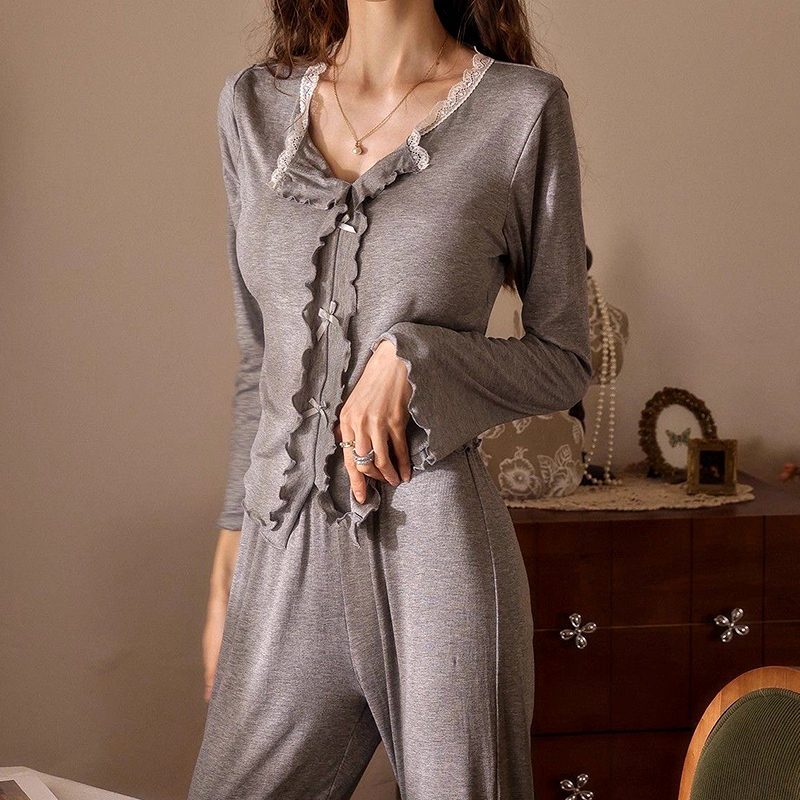
GSM decides thickness and drape; in patterning, relaxed fit, dropped shoulder, and family/matching sets are mainstream trends. A knowledgeable loungewear manufacturer will reverse-engineer the fabric mix from your target customer, not just quote a "generic GSM." For a sustainability angle, go recycled poly or organic cotton, but always require matching certification — fabric hazardous-substance control can reference the OEKO-TEX® standard, an increasingly important compliance threshold for EU/US buyers. For prints and finishes, common homewear options are water-based or plastisol prints, appliqué, and contrast rib; complexity directly affects unit price and lead time and should be spelled out in the Tech Pack.
Fit, Sizing & Patterns: Quantifying "Relaxed Comfort"
"Relaxed comfort" sounds like an adjective, but in production it is quantifiable pattern parameters. Key loungewear pattern points:
- Dropped shoulder and armscye: dropped-shoulder amount and armscye depth decide freedom of movement — the source of the "home" feel.
- Chest and length ease: 4–10 cm more ease than formalwear is what separates loungewear from regular fit.
- Family / matching sets: same pattern scaled by adult/child ratio — a strong-repurchase combo.
- Size grading: recommend an XS–3XL gradient, aligned with target-market size preferences (EU/US runs one size larger).
Once the pattern is finalized, it becomes part of the acceptance baseline. We ask clients to provide or confirm the size chart and verify ease, symmetry, and seams on the pre-production sample, avoiding the gap of "looks loose, fits tight." A reliable custom loungewear manufacturer resolves pattern disputes at the sampling stage, not after bulk.
Quality System: AQL 2.5 + 100% Inspection in Practice
AQL (Acceptance Quality Limit) sets the sampling acceptance standard. MinCharm uses AQL 2.5 + 100% inspection — every piece checked before shipment, not just sampled inspection — significantly lowering defect rates and after-sales disputes. It lands on three gates:
- Pre-production sample confirmation (Golden Sample): use the confirmed sample as the acceptance baseline; bulk is produced against it, no "close enough."
- Inline inspection: key stations (cutting, sewing, printing, inspection) have inline checks; problems are caught early, not at the end.
- Final 100% inspection: every piece checked before shipment, recorded by defect class; inspection report ships with the batch.
Authoritative test-method references also matter: fabric colorfastness, shrinkage, and pilling can follow AATCC and ISO official test methods. When a supplier says "we inspect by AQL," what you should probe is: which stations do inline checks, and will they show you the final records — that separates real QC from fake better than "what AQL number." Whether your OEM loungewear or private label partner, write acceptance terms in black and white.
From Quote to Shipment: Sampling & Bulk Process
On timing: sampling 7–10 days (including fabric confirmation, first proto, and revisions), bulk 25–35 days (varies by style complexity and order volume). Always schedule around peak and off-season — Q3 is often the loungewear shipment peak; we recommend locking capacity 1–2 months ahead. Below are the standard four steps from quote to bulk:
The handling of sampling fees is a common newbie question: standard practice is to charge first, then deduct or refund once bulk reaches the agreed volume — specifics per the quote after Tech Pack confirmation. Put it in the contract to avoid verbal disputes.
Shipping port and trade terms: MinCharm quotes FOB Shenzhen (Shenzhen, China) — transparent and controllable; responsibility for booking and insurance is defined in the contract. If your freight forwarder or destination port has special arrangements, tell us at the inquiry stage and we will coordinate.
Cost & FOB: Where the US$2 Starts
Explaining "ultra-low price" clearly is what keeps people from doubting quality. MinCharm's indicative FOB price starts from US$2, and this price band is held up by three parts:
- Material cost: long-term bulk knit fabric and basic trims (rib, thread, labels) at batch prices.
- Manufacturing cost: 11,000 ㎡ own factory, 200+ workers' scale capacity push per-unit labor and fixed amortization to the low end.
- Process simplification: basic loungewear has relatively standard operations, high yield, low waste, releasing more price room.
Factors affecting final unit price include: fabric GSM and composition (recycled or organic cotton higher), process complexity (print, embroidery, contrast color), size and color counts (affecting changeover waste), and total order volume. Payment rhythm is typically 50% deposit, balance before shipment or before B/L — specifics per contract. Asking about the "unit-price composition" tells you more about a factory's sustainability than staring at one total price.
Compliance & Certifications: Share Early
For loungewear exported to the EU and US, compliance is the entry ticket. MinCharm can provide the following certification documents via selected partner factories on a project basis — but note: certification availability depends on the specific factory, materials, and certification scope, and is not default on every order; share your target-market requirements before sampling.
| Certification | Use Case | How MinCharm Provides |
|---|---|---|
| OEKO-TEX® STANDARD 100 | Hazardous-substance control; baseline for EU/US buyers | For selected fabrics/components, provide documents for review within cert scope |
| BSCI | Social-responsibility audit; common for retail clients | Selected partner factories maintain relevant audit records; review per actual producing factory |
| GRS | Recycled-content claim | Recycled-material solution arranged per project; bounded by supply-chain scope |
| ISO 9001 | Quality management system | Provided via selected manufacturing partners; verified per actual factory and scope |
Our rule: share compliance requirements as early as possible — ideally before sampling or scheduling, tell us which market you enter and which certificates the client needs. Then we can align at the material and factory-selection stage, instead of discovering the certificate mismatch before bulk. Certification documents should be verified against the actual production setup, not assumed to cover all orders.
Eight Common Pitfalls & Avoidance
Compressed from a decade on the production line, these eight pitfalls cover most of the landmines:
- Watch total price only, not unit-price composition — ask how much material, process, and waste each take; low price may come from cutting corners.
- Order without factory audit — photos can be bought; live or on-site audit is non-negotiable.
- Confuse MOQ basis — confirm "per style/color" vs. "total order volume"; the gap can be several times.
- Acceptance baseline not in contract — use the confirmed sample as Golden Sample; write defect grading in black and white.
- Ignore peak and off-season — Q3 loungewear peak; lock capacity 1–2 months ahead.
- Verbal certification promises — demand documents, scope, and the actual producing factory.
- Sampling fee deduction not agreed — state clearly whether deductible or refundable after bulk hits target.
- Unclear shipping port and trade terms — under FOB, define port, who books, who buys insurance.
Why Brands Choose MinCharm as Their Loungewear Manufacturer
Back to the essence of choosing a factory: what you want is a predictable, auditable cooperation framework. MinCharm's differentiators concentrate on verifiable facts, not adjectives:
- Certainty of own capacity: 11,000 ㎡ factory, 200+ workers, up to 600,000 pcs/month — real capacity backstop in peak and off-season.
- Sustainability of ultra-low price: FOB from US$2, backed by scale capacity plus bulk sourcing plus standardized process — not a loss-leader that sacrifices quality.
- Clear MOQ and QC: 1,000 pcs/style/color, AQL 2.5 + 100% inspection, acceptance standards in contract.
- Fast sampling and transparent quote: 7–10 day sampling, transparent FOB quote, 50% deposit rhythm.
- Traceable compliance: OEKO-TEX / BSCI / GRS / ISO 9001 via selected partner factories per project.
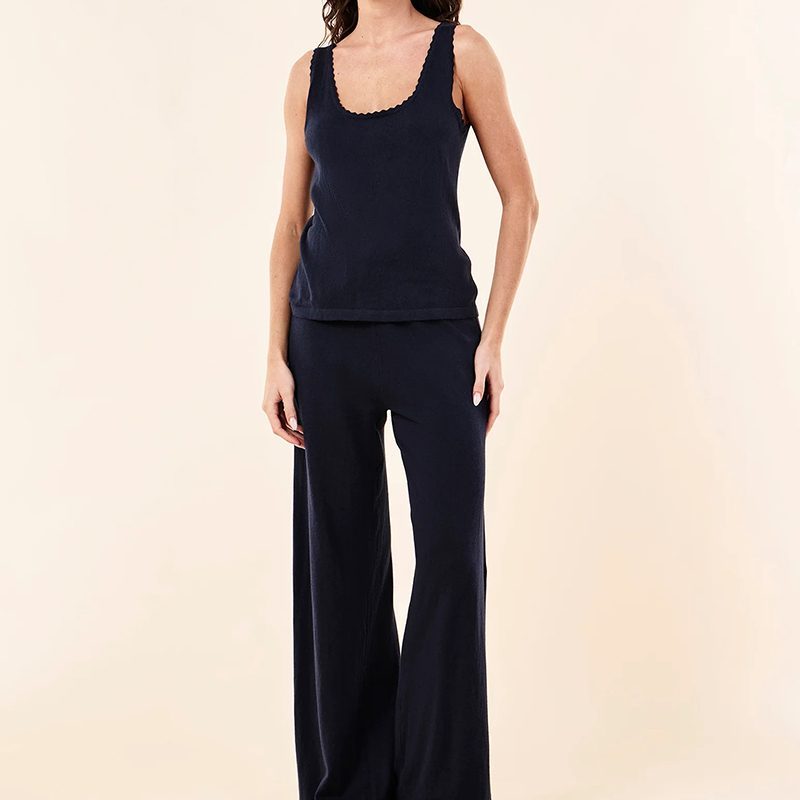
To see the full manufacturing capability and service flow, visit our Custom Loungewear Manufacturer service page.
About MinCharm's Loungewear Production Line
MinCharm has been developing and manufacturing apparel in Dongguan (Guangdong) since 2014, with its own factory in Dongguan, Guangdong, China, plus a Specialized Manufacturing Network for collaborative capacity. We run loungewear and sleepwear on dedicated lines, setting fabric composition, GSM, and pattern to your Tech Pack and re-verifying on bulk fabric.
For buyers planning to scale, our Loungewear Sourcing Guide notes: the 1,000 pcs/style/color standard minimum also maintains the material acceptance standard — order volume only changes production rhythm, not the acceptance standard we measure against. Content compiled by the MinCharm content team for brand and sourcing decision reference.
Can the MOQ 1,000 pcs/style/color be lowered?
The standard line is 1,000 pcs / style / color, rooted in setup, patterning, and minimum dyelot. New clients wanting to validate quality first can pilot with 1–2 core styles rather than lowering the per-style minimum; specifics are negotiable by style complexity and expected follow-on orders, but no floating range is written into the contract. In essence, the 1,000-piece minimum is the scale precondition that supports the ultra-low FOB price from US$2.
What is the difference between AQL 2.5 + 100% inspection and sampling-only?
Sampling-only (e.g., AQL 2.5 sampling) covers only the pieces drawn; leak risk stays in the un-drawn portion. MinCharm uses AQL 2.5 grading plus 100% pre-shipment inspection, every piece checked, significantly lowering batch defects and after-sales disputes; request per-batch inspection reports and defect-class lists as evidence.
How long is sampling, and how is the sampling fee calculated?
Standard sampling takes 7–10 days, including fabric confirmation, first proto, and revisions. The sampling fee is usually deductible or refundable once later bulk reaches the agreed volume — specifics per the quote after Tech Pack confirmation, and recommended in the contract.
Can you do private label and custom fabrics?
Yes. MinCharm supports OEM, ODM, and private label, including custom fabric mixes, hangtags, packaging, and process details. For sustainability (recycled poly or organic cotton), matching certification backing is required before writing into the Tech Pack.
Is the FOB price from US$2 for basic styles or does it include processes?
US$2 is an indicative starting price for the most basic knit homewear style; the final unit price varies with fabric GSM and composition, process complexity (print or embroidery), size and color counts, and total order volume. The formal quote after Tech Pack confirmation governs.
Are certifications per-order or default on all?
Certification availability depends on the actual producing factory, materials, and certification scope, and is not default on every order. OEKO-TEX, BSCI, GRS, and ISO 9001 are provided via selected partner factories per project; we recommend sharing target-market requirements before sampling so material and factory selection can align.
Is the 600,000 pcs/month capacity enough for large orders?
Own-factory monthly capacity reaches 600,000 pcs, plus Specialized Manufacturing Network collaborative capacity, able to take volume orders from brands and wholesalers; but peak and off-season (especially Q3 loungewear peak) needs capacity locked 1–2 months ahead — share your forecast early.
How are shipping port and trade terms set?
MinCharm quotes FOB Shenzhen (Shenzhen, China). Booking, insurance, and cost allocation follow FOB practice and are defined in the contract; if your freight forwarder or destination port has special arrangements, tell us at the inquiry stage and we will coordinate.
Send your next loungewear Tech Pack to MinCharm — or let us help you write "fabric composition, GSM, acceptance standards, certifications" into spec before mass production, instead of discovering mismatches after the first shipment arrives. Talk to our loungewear team about your next order.
Request a QuoteContact: Tel +86 13712870144 | WhatsApp 8613712870144 | Address: No.2 Road of Industrial Zone 12, Dongguan City, Guangdong Province, China