How to Cut Bulk Loungewear Cost Without Sacrificing Quality
Cutting bulk loungewear price is a structure problem, not a race to the cheapest quote. A loungewear manufacturer lowers unit cost by consolidating fabric, colors and size curves, then locking the golden sample so the saving survives the reorder. The lever is where you spend, not what you strip out. A low price loungewear manufacturer earns that price from factory-direct structure while holding the material standard — never by quietly cutting GSM or dropping a named trim.
- Tune, don't trade down: consolidate fabric and colors before you touch GSM or trim.
- Order shape is a cost lever: a full run per style-color dilutes setup; small splits invite it.
- Lock the sample: a sealed baseline keeps the lower price identical on the reorder.
Bottom line: a low price loungewear manufacturer lowers cost through factory-direct structure, not by cutting the material standard — the saving is made in planning, not in the fabric.
- 01What "Lower Cost" Really Means
- 02The Cost Map: What Moves and What Doesn't
- 03Where a Loungewear Manufacturer Finds Real Savings
- 04Fabric Route: Stock Cloth vs Custom Dye
- 05Order Shape as a Cost Lever
- 06Decoration and Trim Without the Premium
- 07Where a Factory-Direct Low Price Comes From
- 08Five "Savings" That Are Quality Cuts
- 09Negotiate the Right Lines
- 10A Cost-Cut Checklist
- 11Why Buyers Cut Cost with MinCharm, a Loungewear Manufacturer
- 12FAQ
What "Lower Cost" Really Means
Every buyer wants a better price, but two kinds of "lower cost" look identical on a quote and behave very differently in production. One lowers the unit price by removing waste from the structure — a fuller run, a shared fabric, a consolidated color. The other lowers it by removing something from the product — thinner cloth, a cheaper trim, a skipped inspection. The first is a saving you can audit; the second is a quality cut that returns as returns, complaints and a reorder that no longer matches.
This guide is the action companion to our cost-stack and quoting articles. Those explain what is inside a price and how to request one accurately. This one shows where a loungewear cost can genuinely come down — and draws the line at the material standard you should never cross.
The Cost Map: What Moves and What Doesn't
Before you push on price, sort the quote into two columns: lines that respond to smarter planning, and lines that are the acceptance standard itself. Only the first column is safe to tune. Write your quote against a map like this:
| # | Cost line | Safe to tune? | How |
|---|---|---|---|
| 1 | Fabric booking | Yes | Share one base cloth across styles; buy at full-run volume. |
| 2 | Dye lot | Yes | Consolidate colors, or use in-stock fabric that needs no dyeing. |
| 3 | Cutting / marker | Yes | Combine size curves into one efficient layout. |
| 4 | Decoration | Yes | Simplify method or count without losing the design intent. |
| 5 | Composition & GSM | Red line | Hold to the sealed sample — this is the product, not a cost lever. |
| 6 | Inspection level | Red line | AQL 2.5 plus full inspection is what protects the standard. |
Rule of thumb: if changing a line changes how the garment looks, feels or lasts, it is not a saving — it is a different product at a lower price.
Where a Loungewear Manufacturer Finds Real Savings
A loungewear manufacturer with real own capacity can lower unit cost without touching the product, because the savings sit in how production is arranged. Four levers do most of the work:
- Fabric consolidation: two styles on one base cloth and one booking share the mill setup instead of paying it twice.
- Color discipline: fewer colors, each at a full run, avoid the small-lot premium that a scattered color split attracts.
- Size curve fit: a curve weighted to real demand wastes less cloth than a full ladder that ships as dead stock.
- Line rhythm: a stable run reaches efficient output; constant small restarts never do.
None of these change the garment on the golden sample. That is the point: the saving is engineered into the plan, so it survives inspection and repeats on the reorder. A supplier who can only offer a lower price by re-specifying the cloth is not lowering cost — they are changing your product.
Fabric Route: Stock Cloth vs Custom Dye
The single biggest cost decision is which fabric route you take. Separate the two before you negotiate:
- Custom-dyed fabric: greige cloth dyed to your own shade in a dedicated lot. It gives you a signature color, but carries a mill dye-lot floor and a setup premium below it. Cost is lowered here by booking a full lot and sharing it across styles.
- In-stock supplier fabric: ready-dyed cloth held in the supplier's warehouse in fixed catalog shades, cut and sewn directly. No dyeing, so no dye-lot premium — often the cheapest route to a good price. The trade-off: colors are limited to the shade card, and stock is finite and first-come, first-served.
If your brand does not own a signature color, in-stock fabric is the fastest legitimate way to cut loungewear cost without lowering the standard — the cloth is finished and inspected, you simply are not paying to create a new shade. Confirm the shade card and available quantity in writing, because a stock color that runs out mid-season is not a saving.
Order Shape as a Cost Lever
How you split an order changes its price more than most buyers expect. The unit cost is not one number; it is the result of how many setups your total is spread across. Three moves keep the shape efficient:
- Full runs over many small colors: one color that clears the minimum beats three colors that each attract a small-lot premium.
- Share the booking: keep styles that use the same base cloth in the same order so the mill setup is paid once.
- Reserve the repeat: hold a second quantity on the same fabric while the lot is open, so the reorder skips setup again.
This is the same logic behind the standard per-style/color minimum: it is the point where setup is diluted and the sewing line settles into rhythm. Planning to it is how a bulk loungewear price comes down honestly — the order is unchanged on the sample, only smarter underneath.
Decoration and Trim Without the Premium
Print, embroidery and trim are visible on the garment, so this is where "cut cost" most often slips into "cut quality". Tune the method, not the intent. Four safe adjustments:
- Match method to design: a simpler print technique that keeps the artwork intact costs less than an over-specified one.
- Consolidate placements: fewer print or embroidery positions per piece reduce setup without changing the look.
- Standardize trim where invisible: shared labels or elastic across styles save on buying without altering the fit or finish.
- Keep the named trim: if a specific trim defines the product, hold it — replacing it is a quality cut, not a saving.
The test is simple: lay the adjusted sample next to the sealed one. If a buyer cannot tell the difference in hand-feel, fit or finish, it is a genuine efficiency. If they can, you have changed the product.
Where a Factory-Direct Low Price Comes From
A low price loungewear manufacturer is low because of structure, not because of thinner fabric. Three things produce a real factory-direct low price that survives a line-by-line audit:
- No middleman: owning the factory returns mill and process margins to you instead of a trading layer adding a resale markup.
- Bulk sourcing: buying cloth and trim at full-run volume lowers the input cost before a needle moves.
- Stable rhythm: a line that runs a consolidated order reaches efficient output, and that efficiency is priced into the unit.
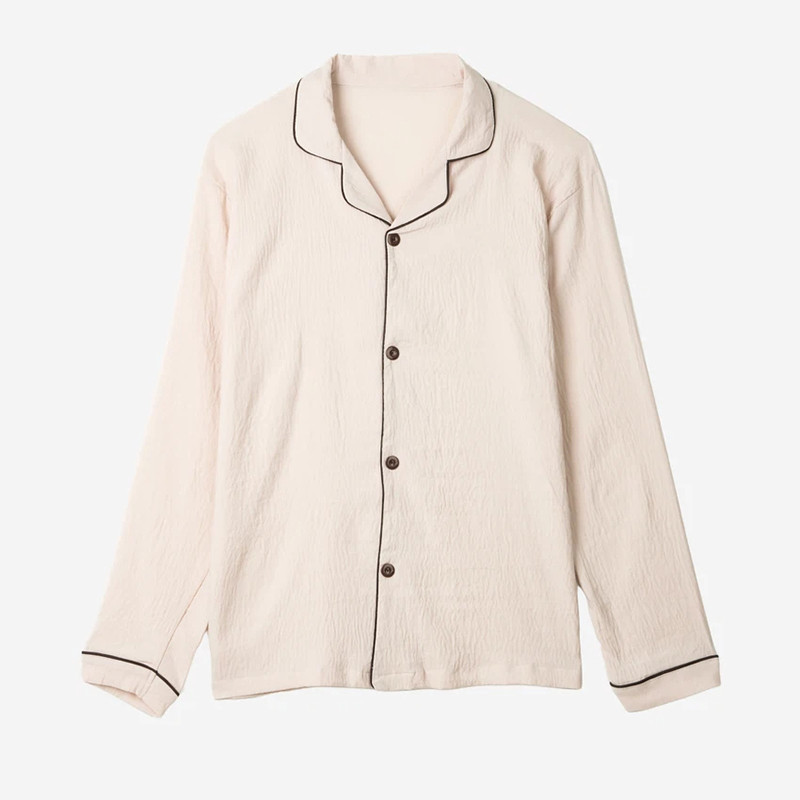
The indicative FOB of US$2 for a piece like our published pajama top (this model US$2.40–2.60) reflects that factory-direct pricing, not a resale markup. Low price paired with a named composition, a sealed sample and an itemized breakdown is a saving you can verify. A lower number with no fabric spec, no breakdown and no factory identity is a cost deferred to your P.O.
Five "Savings" That Are Quality Cuts
Not every lower number is a saving. These five are the classic traps — each reduces the price by changing the product, and each comes back to cost you more:
- Silently lowering GSM: lighter cloth feels cheaper in hand and wears out sooner.
- Unnamed fabric: "cotton blend" with no composition or weight drifts between lots.
- Dropping the named trim: a swapped elastic or label changes finish and sometimes fit.
- Skipping inspection: removing full inspection saves a line item and returns it as defects.
- A hidden middleman: a trader quoting as a factory adds margin without adding control.
Every one of these looks like a cheaper quote on day one. The disciplined buyer reads the lines, keeps the standard fixed and tells the factory which levers are in bounds — so the lower price is real, not borrowed from quality.
Negotiate the Right Lines
Good negotiation is a conversation about structure, not a demand for a smaller number. Come with the levers named and the red lines stated. Four steps keep it productive:
- Ask for the breakdown: you cannot tune what you cannot see — fabric, dye, make, decoration, inspection, FOB.
- Name your levers: say which lines may move (color count, print method, order shape) and which may not (GSM, trim, inspection).
- Trade structure, not standard: offer a fuller run or a shared fabric in exchange for price, not a lighter cloth.
- Lock the result: write the agreed spec, sample ID and price into the PO so the reorder matches.
A factory that protects the standard while helping you hit target price is worth more than one that simply says yes to a lower number and re-specifies at bulk. The goal is a loungewear cost you can hold, season after season.
A Cost-Cut Checklist
Turn the whole approach into one sheet you run before every quote request. Six questions cover the levers and the red lines:
Run this before you ask for a price and the conversation changes: instead of "can you do cheaper", you are asking the factory to prove where the saving comes from. That is the difference between a lower quote and a lower cost.
Why Buyers Cut Cost with MinCharm, a Loungewear Manufacturer
Cutting cost without cutting quality only works with a factory that can do both. MinCharm's claims are verifiable before the PO:
- Real own capacity: 11,000 ㎡ factory, 200+ workers, up to 600,000 pcs/month — scale that provides bulk-sourcing leverage and a stable line.
- Low price loungewear manufacturer: as an own-factory manufacturer, not a trading middleman, MinCharm returns mill and process margins to you — the US$2 indicative FOB reflects factory-direct pricing, not a resale markup, so low price comes from structure, not from cutting the material standard.
- Itemized, sample-locked: fabric, dye lot, decoration and FOB Shenzhen as separate lines, each tied to a sealed golden sample so a tuned cost cannot become a quiet re-spec.
- Standard protected: the per-style/color minimum and AQL 2.5 + full inspection hold the acceptance bar, so a lower price never means a looser check.
- Traceable compliance: OEKO-TEX / BSCI / GRS / ISO 9001 via selected partner factories per project; see the OEKO-TEX STANDARD 100 scope.
- Predictable terms: FOB Shenzhen, 50% deposit / balance before shipment, 7–10 day sampling, 25–35 day bulk.
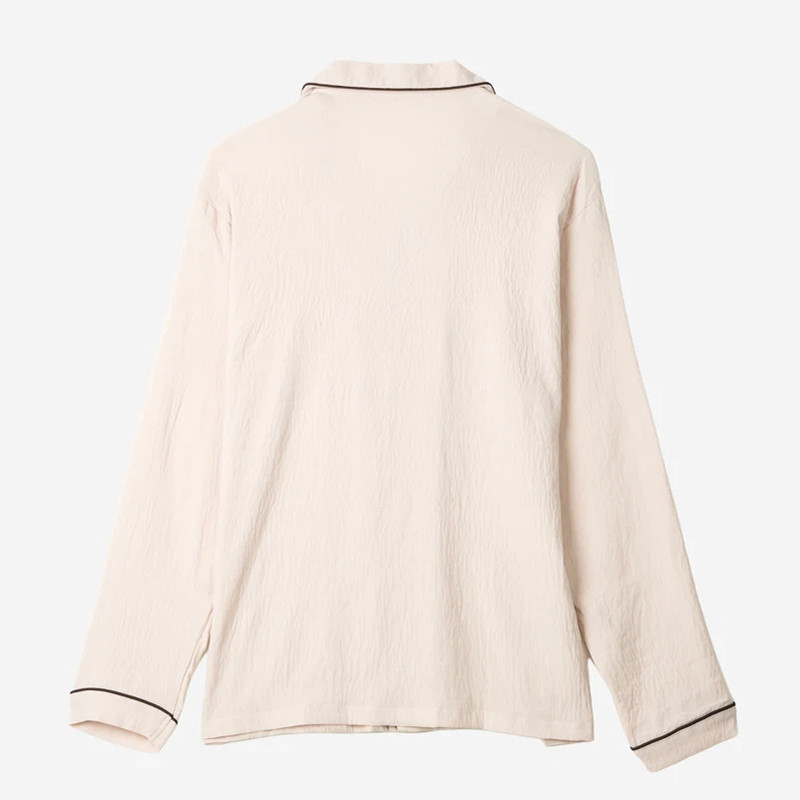
To see these levers on a real product line, start from our Custom Loungewear Manufacturer service page.
About MinCharm's Loungewear Production Line
MinCharm has developed and manufactured apparel in Dongguan (Guangdong) since 2014, with its own factory plus a Specialized Manufacturing Network for collaborative capacity. On loungewear, we execute your Tech Pack to the golden sample, setting fabric composition, GSM, dye route and trim to your spec — then hold that standard while finding cost savings in how the order is arranged, not in the cloth itself.
As a factory-direct loungewear manufacturer with our own Dongguan plant, MinCharm offers low-price custom loungewear built on scale (up to 600,000 pcs/month) and bulk fabric sourcing — low price stays paired with the material standard, never traded away from it.
For buyers working to a target price, our Loungewear Sourcing Guide notes: the standard per-style/color minimum holds the material acceptance standard — order volume changes production rhythm and cost, not the standard we measure against. Content compiled by the MinCharm content team for brand and sourcing decision reference.
What is the safest way to lower bulk loungewear cost?
Tune the structure, not the product. Consolidate styles onto one fabric, keep colors at a full run, fit the size curve to real demand, and reserve the reorder. Each removes waste from the setup without changing the garment on the golden sample — a loungewear manufacturer can quote all of these as separate, verifiable lines.
Can I cut cost without lowering quality?
Yes. Lowering GSM, dropping a named trim or skipping inspection is not a saving — it is a different, weaker product. Real savings come from fabric route, order shape and factory-direct structure. Hold composition, GSM, trim and inspection fixed, and move the lines around them.
Is in-stock fabric cheaper than custom dyeing?
Usually, yes, because it needs no dye lot and carries no setup premium. The trade-off is limited colors from the supplier's shade card and finite stock. If your brand does not need a signature color, in-stock fabric is the fastest legitimate route to a lower unit price without touching the material standard.
Does a bigger order always lower the unit price?
Not linearly. Cost drops when the order clears the per-style/color minimum and then in steps as fabric and trim hit volume breaks. But splitting a total into many small colors can raise cost by triggering a setup premium each time. It is the shape of the order, not just its size, that sets the price.
What should I never negotiate away?
Composition, GSM, the named trim and the inspection level (AQL 2.5 plus full inspection). These define the product and protect consistency. If a supplier can only reach your target by changing one of them, the quote is a quality cut dressed as a discount.
Why is a factory-direct quote lower than a trader's?
An own-factory manufacturer controls the production and keeps the mill and process margins instead of a trading layer adding a resale markup. That is a structural saving you can audit in an itemized quote. A trader may quote low but cannot show the floor, the license or the worker count, and adds margin without adding control.
How do I keep the saving on the reorder?
Write the composition, GSM, dye route, trim, golden sample ID, inspection level and FOB Shenzhen into the first PO, then reference them on the repeat. MinCharm flags any material change before cutting the reorder, so the lower price stays a real cost advantage rather than a one-time number.
What does FOB Shenzhen include in the quoted price?
FOB Shenzhen covers the goods delivered to Shenzhen port, with booking and insurance following FOB practice and defined in the contract. It excludes ocean freight, destination duties and last-mile delivery. Always compare quotes on the same trade term — FOB to FOB — so the lower number is truly lower cost.
Before your next quote, send MinCharm your cost map — the lines you want tuned and the standard you want held — and let us return an itemized, factory-direct low-price loungewear quote that shows exactly where the saving comes from. Lower cost, same sealed sample, reorder after reorder.
Request a QuoteContact: Tel +86 13712870144 | WhatsApp 8613712870144 | Address: No.2 Road of Industrial Zone 12, Dongguan City, Guangdong Province, China