How to Develop a Private Label Loungewear Collection
Developing a private label loungewear collection is a sequence, not a single leap. A loungewear manufacturer turns a one-page brief into styles, a tech pack, samples and a first bulk run — each stage signed off before the next begins. The discipline is to decide fabric, fit and price on paper before you cut. A low price loungewear manufacturer earns that price from factory-direct structure while holding the material standard you set.
- Brief first, sketch second: define audience, styles, fabric direction, target FOB and launch window on one page.
- Lock the sample: one sealed golden sample per style is the reference every later stage measures against.
- Start small and coherent: two to four styles on shared fabric reach efficient output and fund the next extension.
Bottom line: a low price loungewear manufacturer lowers cost through factory-direct structure, not by cutting the material standard — so the price you planned is the price you can repeat.
- 01What "Private Label" Means in Loungewear
- 02The Development Roadmap at a Glance
- 03Where a Loungewear Manufacturer Fits In
- 04Stage 1: Write the Collection Brief
- 05Stage 2: Choose Fabric and Colors
- 06Stage 3: Build the Tech Pack
- 07Stage 4: Sample, Fit and the Golden Sample
- 08Stage 5: Branding and Packaging
- 09Stage 6: Price the First Run
- 10A Development Checklist
- 11Why Build With MinCharm, a Loungewear Manufacturer
- 12FAQ
What "Private Label" Means in Loungewear
Private label means the product carries your brand while a factory makes it to your specification. In loungewear that covers more than a sewn-in label: fabric composition, GSM, color, fit, trims, packaging and the inspection standard are all yours to define. The factory supplies the capacity and the know-how; you own the spec and the brand.
That split is why development is a sequence. Every decision you make early — a fabric, a shade, a trim — becomes a line in the cost sheet and a checkpoint on the sample. Getting the order right is what turns an idea into a line you can actually reorder.
The Development Roadmap at a Glance
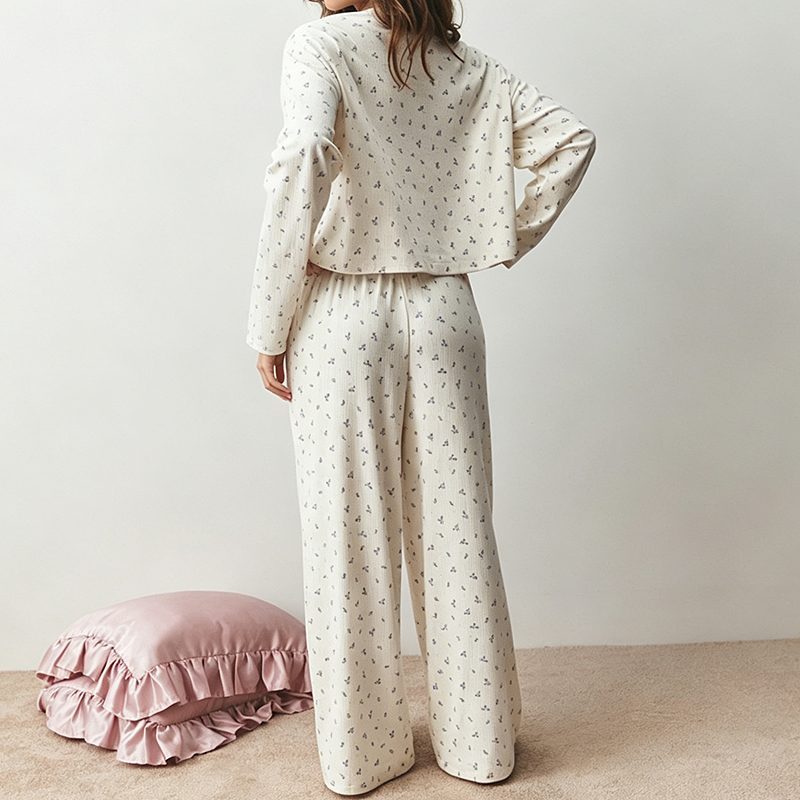
Before you dive into any single stage, see the whole path. Six stages take a loungewear line from a blank page to a deliverable first run:
| # | Stage | You decide | Factory returns |
|---|---|---|---|
| 1 | Collection brief | Audience, styles, target price, window | Feasibility and an indicative range |
| 2 | Fabric & colors | Composition, GSM, shade card | Swatch card and stock-vs-dye route |
| 3 | Tech pack | Fit, construction, trims, artwork | A buildable spec with open questions flagged |
| 4 | Samples & fit | Approvals and revisions | Proto, revised sample, sealed golden sample |
| 5 | Branding & pack | Labels, hangtags, polybag, carton | Mock-ups and a packing spec |
| 6 | First bulk run | Quantity, PO terms, inspection | Itemized cost and a delivered, inspected run |
Sign off each row before the next one opens. A skipped decision does not disappear — it returns as a change order once fabric is booked or cutting has begun.
Where a Loungewear Manufacturer Fits In
A loungewear manufacturer with real own capacity is not just a pair of hands at the end. The right one is a development partner at every stage, and the value shows up in four places:
- Translating intent into spec: turning "soft and cozy" into composition, GSM, stitch and trim a mill can actually produce.
- Fabric access: a swatch library and supplier stock that shorten sampling without inventing a new shade.
- Cost visibility: an itemized quote that shows where each dollar sits, so you can tune the line rather than guess.
- Repeatability: a sealed golden sample and an inspection standard that make the second run match the first.
Choose the partner before you finalize the design. A manufacturer who comments on a sketch early will save you two sample rounds; one who only quotes at the end will simply price whatever you hand over.
Stage 1: Write the Collection Brief
The brief is the cheapest document in development and the most valuable. Keep it to one page and answer five questions:
- Who is it for? Age, climate, channel and how the pieces will be worn — loungewear for layering differs from sleepwear for warm nights.
- How many styles? Two to four for a first line, built on one or two base fabrics so setup is shared.
- What is the fabric direction? A hand-feel, a weight range and any must-have property such as stretch or recycled content.
- What is the target FOB? A realistic band per piece, not a single hopeful number — it governs fabric and trim choices.
- When does it need to land? The launch window sets sampling, booking and bulk in reverse order.
A brief like this gives a custom loungewear manufacturer something concrete to quote. It is also the document you return to when a new idea threatens to expand scope mid-development.
Stage 2: Choose Fabric and Colors
Fabric is the largest cost line and the strongest determinant of how the collection feels. Settle two things before sampling:
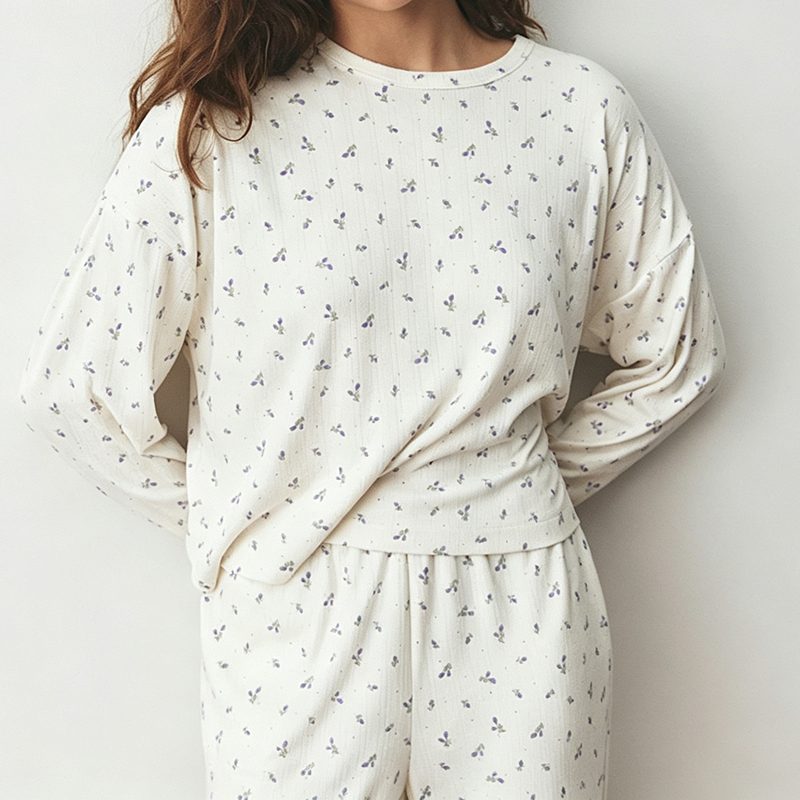
- Composition and weight: name the fiber blend and GSM. Our published openwork knit set, for example, uses 95% recycled polyester with 5% elastane — a specific spec, not "a soft knit".
- Stock cloth or custom dye: in-stock supplier fabric needs no dye lot and reaches a good price faster, but colors are limited to the shade card and stock is finite. Custom dye buys a signature color at the cost of a dye-lot minimum.
If your brand does not need an exclusive shade, in-stock cloth is the fastest legitimate route to a lower loungewear cost without lowering the standard — the fabric is already finished and inspected. Confirm the shade card and available quantity in writing, because a color that runs out mid-run is not a saving.
Stage 3: Build the Tech Pack
The tech pack is the contract between your intent and the factory's build. It does not need to be beautiful; it needs to be complete. Six items cover the essentials:
- Reference image or sketch of the style, front and back.
- Fabric spec: composition, GSM, finish and approved shade.
- Graded size chart with measurements for every size, not just one sample size.
- Construction notes: seam type, stitch count, hem, neckline and closure.
- Trim and label list: elastic, drawcord, zipper, main label, care label and their placement.
- Artwork for any print or embroidery, with size and placement marked.
Flag every open decision as a question rather than a guess. A manufacturer who answers those questions on the pack is doing development work; one who silently picks a substitute is setting up a future dispute.
Stage 4: Sample, Fit and the Golden Sample
Sampling turns the pack into a garment you can hold. Expect three steps, and resist the urge to skip any of them:
- Proto sample: confirms construction and proportion. Fit corrections and fabric hand-feel are judged here.
- Revised sample: applies the corrections and finalizes trims, labels and artwork placement.
- Golden sample: the sealed, approved reference that every production run is measured against.
Typical first-sample development takes 7–10 days; each revision adds a round. Keep comments consolidated — one clear list per round is faster than a trickle of separate emails. Once the golden sample is signed, photograph it, label it with an ID, and write that ID into the PO.
Stage 5: Branding and Packaging
This is the stage that turns a garment into your product. Decide the visible elements as a set, so they ship together with the bulk:
- Labels: woven main label, care label and size label, with content and placement specified.
- Hangtags: brand, style, size, barcode and any sustainability claim you can actually substantiate.
- Polybag and carton: bag print, packing ratio per carton, and carton marking.
- Consistency check: confirm that the label and tag on the bulk match the ones approved on the sample.
Branding is also where claims need care. If you specify recycled content, ask for the relevant scope and documentation rather than assuming a certification transfers to your order. A verifiable claim protects the brand; an unverified one becomes a liability at customs or on shelf.
Stage 6: Price the First Run
Now the quote becomes a decision. A first run is priced line by line — fabric, dye or stock premium, make, decoration, packaging, inspection and FOB — and each line should trace back to a choice you made in stages 1 to 5:
- Order shape: the standard minimum is 1,000 pieces per style per color, the point where setup is diluted and the line reaches rhythm.
- Honest levers: consolidate colors, share fabric across styles and fit the size curve to real demand — each lowers cost without changing the sample.
- Quality red lines: composition, GSM, named trim and AQL 2.5 plus full inspection stay fixed.
This is where a factory-direct low price becomes visible. As an own-factory manufacturer, we return mill and process margins instead of a trading layer adding a resale markup; the indicative FOB from US$2 reflects that structure. A lower number with no spec, no breakdown and no factory identity is not a lower cost — it is a cost deferred to your PO.
A Development Checklist
Run this before you approve any stage. Seven questions keep a collection on schedule and on spec:
Worked in this order, development stops being a scramble. Each stage has a deliverable you can approve — and a reference you can point to when the next one begins.
Why Build With MinCharm, a Loungewear Manufacturer
Development works best with a factory that can carry a line from brief to reorder under one standard. MinCharm's claims are verifiable before the PO:
- Real own capacity: 11,000 ㎡ factory, 200+ workers, up to 600,000 pcs/month — the scale that supports sampling, bulk and repeat runs under one roof.
- Low price loungewear manufacturer: as an own-factory manufacturer, not a trading middleman, MinCharm returns mill and process margins to you — the indicative FOB from US$2 reflects factory-direct pricing, not a resale markup. Low price comes from structure, never from cutting the material standard.
- Development partner: fabric swatches, a buildable tech pack and 7–10 day sampling, with open questions flagged rather than guessed.
- Sample-locked: a sealed golden sample and AQL 2.5 plus full inspection hold the standard from the first run to the reorder.
- Traceable compliance: OEKO-TEX / BSCI / GRS / ISO 9001 via selected partner factories per project; see the OEKO-TEX STANDARD 100 scope.
- Predictable terms: FOB Shenzhen, 50% deposit / balance before shipment, standard 1,000 pcs per style/color MOQ, 25–35 day bulk.
To see how a real style is specified before development begins, start from our Custom Loungewear Manufacturer service page.
About MinCharm's Loungewear Development Line
MinCharm has developed and manufactured apparel in Dongguan (Guangdong) since 2014, with its own factory plus a Specialized Manufacturing Network for collaborative capacity. On loungewear we work from your brief to the golden sample — setting composition, GSM, dye route and trim to your spec — then hold that standard through sampling, bulk and reorder.
As a factory-direct loungewear manufacturer with our own Dongguan plant, MinCharm offers low-price custom loungewear built on scale (up to 600,000 pcs/month) and bulk fabric sourcing. Low price stays paired with the material standard, never traded away from it.
For buyers planning a first line, our Loungewear Sourcing Guide notes: the standard per-style/color minimum holds the acceptance standard — volume changes production rhythm and cost, not the standard we measure against. Content compiled by the MinCharm content team for brand and sourcing decision reference.
What is the first step in a private label loungewear collection?
Define the line before you draw a sketch: who it is for, how many styles, the fabric direction, the target FOB and the launch window. A one-page brief gives a custom loungewear manufacturer something to price and sample against, instead of a vague idea.
How many styles should a new loungewear line start with?
Small and coherent. Two to four styles built on one or two base fabrics share mill setup and let a factory reach efficient output sooner. You can extend the line once the first run sells and the golden samples are locked.
What goes into a tech pack for loungewear?
A sketch or reference, fabric composition and GSM, the colorway, a size chart with graded measurements, construction and stitch notes, trim and label specification, print or embroidery artwork, and the inspection standard. The clearer the pack, the fewer sample rounds.
How long does loungewear sample development take?
Typical development is 7–10 days for a first sample; revisions add a round each. Confirming fabric and trims early — and using in-stock cloth where the shade card fits — is the fastest legitimate way to shorten the cycle.
Do I need my own fabric and trims?
No. A custom loungewear manufacturer can source fabric and trims to your spec, or use supplier in-stock fabric when your shade card allows it. Own materials make sense only at a volume that justifies separate booking and control.
Can a low price still mean good quality?
Yes, when the low price is structural. An own factory returns mill and process margins and buys cloth at full-run volume — that is a factory-direct low price you can audit line by line. It is not the same as lowering GSM, swapping a named trim or skipping inspection.
What is the standard minimum for a loungewear style?
Our standard MOQ is 1,000 pieces per style per color. It is the point where setup is diluted and the sewing line settles into rhythm. Discussing it with your manufacturer early keeps your development plan realistic.
How do I protect my collection on the reorder?
Write composition, GSM, dye route, trim, the golden sample ID, inspection level and FOB Shenzhen into the first PO, then reference them on every repeat. A manufacturer should flag any material change before cutting the reorder.
Bring MinCharm your collection brief — the styles, fabric direction, target price and launch window — and let our team return a stage-by-stage development plan with itemized costing. A factory-direct low-price loungewear program, built on your spec and locked to your golden sample.
Request a QuoteContact: Tel +86 13712870144 | WhatsApp 8613712870144 | Address: No.2 Road of Industrial Zone 12, Dongguan City, Guangdong Province, China