How to Evaluate a Loungewear Manufacturer Before Bulk Order
Evaluate a custom loungewear manufacturer before a bulk order by verifying factory identity, validating the golden sample, and locking acceptance terms in contract — not by trusting the sales deck.
- Confirm it is a real factory: a clothing factory audit (floor, license, headcount) beats a catalog of photos.
- Validate sample-to-bulk: the golden sample must be the written baseline, not "good enough."
- Lock QC and terms: AQL 2.5 + 100% inspection and FOB Shenzhen written into the PO.
Bottom line: one pre-order evaluation costs far less than a 1,000-piece bulk defect — audit first, commit second.
- 01Why a Pre-Bulk-Order Evaluation Matters
- 02Start With Factory Identity: Verify It Is a Real Factory
- 03The Sample-to-Bulk Validation Checklist
- 04Capability Verification Beyond the Sales Pitch
- 05What a Loungewear Manufacturer Should Show in a Quality Audit
- 06Capacity and Peak-Season Stress Test
- 07Compliance and Certification Verification
- 08Contract Safeguards Before You Sign
- 09Red Flags That Should Stop a Bulk Order
- 10A Practical 10-Point Pre-Order Evaluation Sheet
- 11Why Brands Choose MinCharm as Their Loungewear Manufacturer
- 12FAQ
Why a Pre-Bulk-Order Evaluation Matters
A cheap sample and a reliable bulk run are not the same thing. The gap between them is where most loungewear buyers lose money — a detail that passes on one prototype gets multiplied across a 1,000-piece production order. Before you release a purchase order, an evaluation is how you de-risk the run: it tells you whether the supplier can reproduce what they showed you, not just whether they can quote a low price.
This guide covers the practical checks a brand should run before committing a bulk order to a custom loungewear manufacturer: factory identity, sample-to-bulk validation, capability, quality audit, compliance, contract terms, and the red flags that should stop you. It pairs with our broader guides on choosing a partner and on the OEM model.
Start With Factory Identity: Verify It Is a Real Factory
The first filter is also the most skipped. Many "manufacturers" are trading companies reselling another plant's output — fine for some, but you should know which you are dealing with, because it changes accountability, lead time, and who fixes a defect. A proper clothing factory audit looks past the sales deck:
- Production-floor evidence: ask for live facility video or photos of the sewing lines, not just finished-garment shots.
- Business and capacity documents: business license, worker count, and a footprint you can reconcile with claimed monthly output.
- Subcontracting disclosure: if any process goes out, you want it named and bound by the same quality and confidentiality terms.
- Pattern and grading capability: can they read your size chart and grade it, or do they only copy an existing sample?
A real loungewear manufacturer shows you the sewing floor and the inspection bench. A trader shows you a catalog. The floor is the honest part — ask to see it before you ask for a quote.
MinCharm develops and manufactures apparel in Dongguan (Guangdong) with its own factory (11,000 ㎡, 200+ workers) plus a Specialized Manufacturing Network for peak and category widening — one contact, one QC standard, broader capacity.
The Sample-to-Bulk Validation Checklist
Bulk quality is locked at the sample stage, not inspected in at the end. The evaluation question is not "do they make a nice sample" but "do they treat the sample as the contract baseline." A disciplined flow:
When you evaluate a supplier, ask to see their inspection records from a past order against a golden sample. Records are how you verify; a promise is how you get surprised. MinCharm's standard sampling takes 7–10 days and bulk runs 25–35 days by style complexity and volume.
Capability Verification Beyond the Sales Pitch
Sales decks list everything; production floors deliver selectively. Verify capability as behavior, not claims:
| Claim to verify | What "real" looks like | What to ask for |
|---|---|---|
| Reorder consistency | Same fabric, same hand, six months later | A reorder case, not a promise |
| Peak-season headroom | Your slots protected when everyone orders at once | Their Q3 capacity plan |
| Fabric sourcing control | They specify and test, not just buy blind | Mill relationships and test reports |
| Pattern and grading | They read and grade your size chart | A graded spec from your drawing |
For loungewear, "capability" is also about hand-feel consistency — the softness and drape buyers repurchase on. A supplier who can name the exact composition, GSM band, and a touch reference sample is operating at a different level than one who says "don't worry, it'll be soft."
What a Loungewear Manufacturer Should Show in a Quality Audit
A credible loungewear manufacturer treats quality as a recorded system, not a vibe. In your quality audit, look for these specifics rather than a generic "we inspect everything":
- AQL level stated: MinCharm uses AQL 2.5 plus 100% inspection as the acceptance standard — know the level, not just that inspection exists.
- Inline and final records: can they show inline-check logs and final-inspection reports per batch, with defect classification?
- Golden-sample anchoring: your bulk order inspection should reference the signed golden sample, not a floating idea of "quality."
- Skin-contact compliance: loungewear worn against skin should reference the OEKO-TEX® standard for hazardous-substance control — an increasingly common EU/US entry requirement.
The takeaway for evaluation: a factory that shows you defect-class records per batch is one you can audit after the fact. One that shows you only a "passed" stamp is one you must trust blindly.
Capacity and Peak-Season Stress Test
Loungewear demand peaks around Q3, and every brand orders at once. Capacity is not a single number on a brochure — it is whether your slots survive the crush. Stress-test it:
- Peak protection: how do they reserve capacity for contracted buyers when the floor is full? Ask for the mechanism, not the headcount.
- Network flexibility: own lines plus a specialized network let a factory widen categories and absorb peak without outsourcing your spec to strangers.
- Reorder rhythm: confirm they can reproduce the golden sample months later on the same fabric and hand.
MinCharm's own factory (11,000 ㎡, 200+ workers, up to 600,000 pcs/month, since 2014, Dongguan) secures core-category lead times, while the network widens categories and peak capacity — one QC standard across both.
Compliance and Certification Verification
Certifications matter, but only the ones that actually apply to your order and market. Verify scope, not just a logo on a slide:
- Match cert to use: OEKO-TEX for skin-contact safety, GRS for recycled-content claims, BSCI for social compliance, ISO 9001 for management systems.
- Confirm the holder: which factory holds the certificate, and is your actual producing unit within its scope?
- Check validity: certificates expire; ask for the current valid certificate number and scope, not last year's PDF.
MinCharm provides OEKO-TEX, BSCI, GRS, and ISO 9001 via selected partner factories per project — share your target-market requirements before sampling so material and factory selection align, rather than discovering a gap after bulk.
Shipping port and trade terms: MinCharm quotes FOB Shenzhen (Shenzhen, China) — transparent and controllable; booking and insurance follow FOB practice and are defined in the contract. Tell us your forwarder or destination-port arrangements at the inquiry stage and we will coordinate.
Contract Safeguards Before You Sign
The evaluation ends in the contract. Lock these before you release the PO, not after a problem appears:
- Golden sample in writing: the confirmed sample is the acceptance standard, attached to the contract.
- Inspection standard: AQL 2.5 + 100% inspection, with defect classification and who inspects.
- IP and confidentiality: NDA plus production-scoped terms — they produce your design but do not sell, relabel, or show it as their catalog.
- Payment terms: typically 50% deposit, balance before shipment; sampling fee deductible/refundable once bulk reaches agreed volume.
- Shipping and trade terms: FOB Shenzhen, with who books and who insures defined.
- Remedy clauses: what happens on a failed inspection — rework, replacement, or refund thresholds.
Red Flags That Should Stop a Bulk Order
Compressed from the evaluation floor, these are the signals worth weighing more than a low quote:
- Refuses a factory view: no floor video, only finished-product photos — identity unknown.
- No golden-sample discipline: "close enough" instead of a signed baseline.
- Vague inspection: "we check quality" with no AQL level or records.
- Verbal-only terms: price, sampling fee, and remedy "we'll sort it" — nothing in writing.
- Hesitates on IP: friction on NDA or confidentiality is a louder signal than price.
- Unverifiable claims: capacity, certifications, or reorder cases they cannot show.
- Lowest quote, fastest yes: a partner who guesses instead of asking will scale that guess across your bulk.
A Practical 10-Point Pre-Order Evaluation Sheet
Turn the above into a one-page checklist you run on every supplier before the PO:
| # | Check | Pass criterion |
|---|---|---|
| 1 | Factory identity | Floor video + license + worker count shown |
| 2 | Subcontracting | Disclosed and bound by same terms |
| 3 | Golden sample | Written acceptance baseline attached |
| 4 | Sampling time | 7–10 days with revision loop |
| 5 | Inspection | AQL 2.5 + 100% with defect records |
| 6 | Reorder case | Same fabric/hand months later |
| 7 | Peak plan | Mechanism to protect your slots |
| 8 | Certifications | Valid, in-scope, matching market |
| 9 | Contract terms | Payment, FOB Shenzhen, remedy in writing |
| 10 | IP terms | NDA + confidentiality accepted |
Why Brands Choose MinCharm as Their Loungewear Manufacturer
Choosing a partner is choosing a cooperation framework you can predict and audit. MinCharm's differentiators are verifiable facts a buyer can check before the PO:
- Real, own capacity: 11,000 ㎡ factory, 200+ workers, up to 600,000 pcs/month — a backstop in peak and off-season.
- Sample-to-bulk discipline: golden sample as the written baseline, AQL 2.5 + 100% inspection, records shipped with the batch.
- Sustainable ultra-low price: FOB from US$2, backed by scale plus bulk sourcing plus standardized process — not a quality-cutting loss leader; 1,000 pcs/style/color MOQ holds the material standard.
- Traceable compliance: OEKO-TEX / BSCI / GRS / ISO 9001 via selected partner factories per project.
- Transparent trade terms: FOB Shenzhen, with port, booking, and insurance defined in the contract.
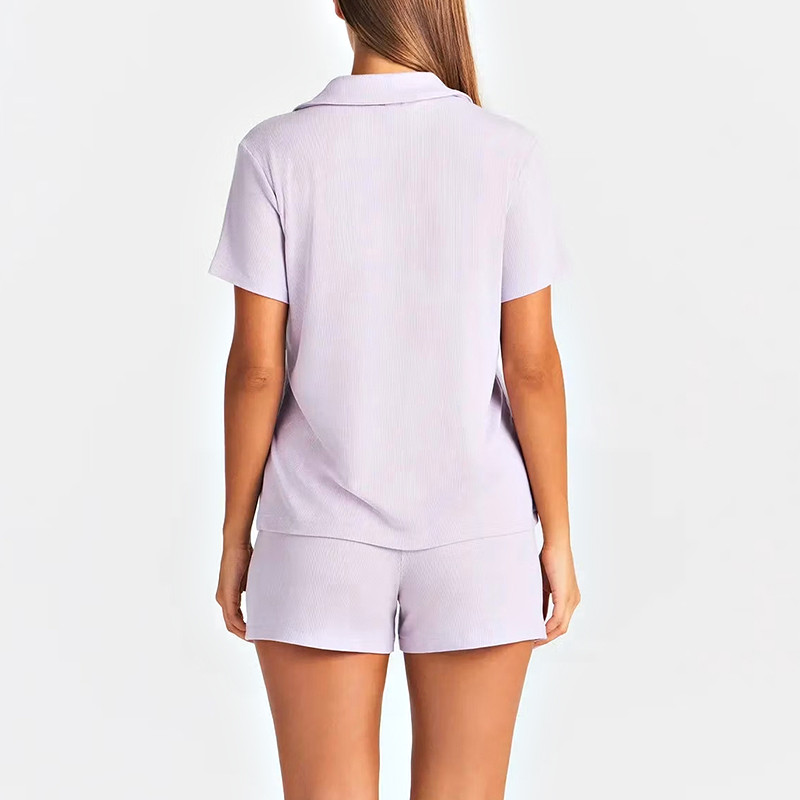
To see the full manufacturing capability and service flow, visit our Custom Loungewear Manufacturer service page.
About MinCharm's Loungewear Production Line
MinCharm has developed and manufactured apparel in Dongguan (Guangdong) since 2014, with its own factory plus a Specialized Manufacturing Network for collaborative capacity. On loungewear, we execute your Tech Pack to the golden sample, setting fabric composition, GSM, and pattern to your spec and re-verifying on bulk fabric.
For buyers planning to scale, our Loungewear Sourcing Guide notes: the 1,000 pcs/style/color standard minimum maintains the material acceptance standard — order volume changes production rhythm, not the standard we measure against. Content compiled by the MinCharm content team for brand and sourcing decision reference.
How do I confirm a supplier is a real factory, not a trading company?
Ask for live facility video or photos of the sewing and inspection lines, a business license, and a worker count you can reconcile with claimed output; require disclosure of any subcontracted process. A real loungewear manufacturer shows the floor; a trader shows a catalog. MinCharm operates its own Dongguan factory (11,000 ㎡, 200+ workers) plus a network, and discloses subcontracting in writing.
What should the golden sample clause say?
The confirmed proto should be attached to the contract as the written acceptance baseline, with the AQL level, defect classification, and who inspects stated. Bulk is produced and inspected against that sample, with no "close enough." Keep the golden sample and its records; they are your reference if a dispute arises after shipment.
Is AQL 2.5 plus 100% inspection enough for loungewear?
For most bulk loungewear it is a strong baseline: AQL 2.5 sets the acceptable defect rate, and 100% inspection means every piece is checked against the golden sample before shipment, with defect-class records. For skin-contact items, pair it with OEKO-TEX verification of the fabric. The key is that the level and records are stated, not assumed.
How do I verify reorder consistency months later?
Ask the supplier for a reorder case: same fabric, same hand-feel, same construction on a repeat run. That is what the golden sample and recorded bulk-fabric standard are for. MinCharm reproduces the confirmed sample on the same fabric and hand, and flags any material change before cutting the repeat run.
What certifications should I ask for on loungewear against skin?
Prioritize OEKO-TEX STANDARD 100 for hazardous-substance safety on skin-contact fabric, then GRS for recycled-content claims, BSCI for social compliance, and ISO 9001 for management systems. Verify the certificate is current, in scope for your producing unit, and matches your target market — not just a logo on a slide.
How are payment and shipping terms set before bulk?
MinCharm typically works on 50% deposit with balance before shipment, and quotes FOB Shenzhen (Shenzhen, China). Booking, insurance, and cost allocation follow FOB practice and are written into the contract; if your freight forwarder or destination port has special arrangements, tell us at the inquiry stage and we coordinate.
What red flags mean I should walk away?
The loudest signals are: refusal to show the factory floor, no golden-sample discipline ("close enough"), vague inspection with no AQL level or records, verbal-only terms, hesitation on NDA/IP, unverifiable capacity or certification claims, and a lowest-quote-fastest-yes attitude. Any one of these is worth weighing more than price before you release a bulk PO.
Can MinCharm support a clothing factory audit or visit?
Yes. We provide facility evidence — floor, license, worker count, and capacity — and support buyer or third-party audits. Subcontracted processes are disclosed and bound by the same quality and confidentiality terms, so what you audit is what produces your order.
Before your next bulk order, send MinCharm your Tech Pack and let us walk the pre-order evaluation with you — factory evidence, golden-sample baseline, and AQL 2.5 plus 100% inspection in writing — so the 1,000 pieces you commit are the 1,000 pieces you approved.
Request a QuoteContact: Tel +86 13712870144 | WhatsApp 8613712870144 | Address: No.2 Road of Industrial Zone 12, Dongguan City, Guangdong Province, China