Request an Accurate Quote from a Loungewear Manufacturer
Get an accurate quote from a custom loungewear manufacturer by sending a complete RFQ brief — Tech Pack, order shape, decoration, FOB Shenzhen — then reading replies line by line, not headline price.
- Send the spec, not a wish: composition, GSM, sizes, trim named prevent vague numbers.
- Compare FOB to FOB: a missing line is a cost you absorb later, not a saving.
- Lock the golden sample: written baseline the quote must match on bulk.
Bottom line: a low-price loungewear manufacturer must still itemize every line — cheap without a breakdown is the risk, not the discount.
- 01Why Most Quotes Come Back Wrong
- 02What an Accurate Loungewear Quote Must Contain
- 03Build the RFQ Brief Your Loungewear Manufacturer Can Quote On
- 04The RFQ Brief Template (Copy-Paste)
- 05How to Read a Quote Apples-to-Apples
- 06Sample-to-Quote: Lock the Golden Sample First
- 07Red Flags in a "Too Cheap" Quote
- 08Negotiate Without Losing the Material Standard
- 09Turn the Quote Into a Locked PO
- 10Reorder Quoting: Keep It Predictable
- 11Why Buyers Trust MinCharm as Their Loungewear Manufacturer
- 12FAQ
Why Most Quotes Come Back Wrong
A quote is only as good as the brief behind it. Buyers often send a one-line request — "make us loungewear, quote best price" — and then wonder why two suppliers return numbers that cannot be compared. The gap is rarely malice; it is missing variables. Before you judge any loungewear manufacturer on price, understand that the quote is a mirror of the information you supplied.
This guide is the buyer-side companion to our cost-breakdown article. It shows how to send a brief a factory can actually quote on, how to read the reply line by line, and how to turn an accurate quote loungewear teams respect into a locked purchase order.
What an Accurate Loungewear Quote Must Contain
An accurate quote is itemized, not a single headline number. At minimum it should name: fabric composition and GSM, construction (cut / sew / finish), decoration (print / embroidery / trim), sampling terms, and the trade term — FOB Shenzhen in our case. If a line is absent, the price is not wrong so much as unfinished; the missing line is a cost someone absorbs after the PO, usually you.
Ask for the breakdown up front. A supplier who itemizes is one whose loungewear manufacturer process you can trust; a supplier who resists it is asking you to price a mystery.
Build the RFQ Brief Your Loungewear Manufacturer Can Quote On
You get a tight quote by sending a tight brief. A loungewear manufacturer quotes reliably only when the variables are named, not implied. Cover these before you hit send:
- Tech Pack: fabric composition, GSM, size chart, construction, and trim specified — not "make it soft."
- Order shape: styles × colors × quantities, so the 1,000 pcs/style/color MOQ effect is real, not assumed.
- Decoration: print / embroidery placement and count per piece, named exactly.
- Trade term: FOB Shenzhen (or your preference) stated, so freight is not guessed.
- Market certs: OEKO-TEX / GRS / BSCI / ISO 9001 scope you need, named up front.
- Target price band: a range helps the supplier tune fabric and decoration to hit it.
The RFQ Brief Template (Copy-Paste)
Turn the list above into a single brief you reuse on every inquiry. A disciplined RFQ is what makes an accurate quote loungewear buyers can compare possible:
| # | RFQ field | What to fill in |
|---|---|---|
| 1 | Product & reference | Style name, target silhouette, and any reference image or existing sample. |
| 2 | Fabric spec | Composition + GSM (e.g. 95% cotton 5% spandex, 180 GSM). |
| 3 | Size & grading | Size chart and whether grading is supplied or needed. |
| 4 | Order shape | Styles × colors × quantities per color. |
| 5 | Decoration | Print / embroidery placement, count, and method. |
| 6 | Trim & label | Custom labels, tags, and packaging requirements. |
| 7 | Trade term | FOB Shenzhen (or your port) stated clearly. |
| 8 | Certs needed | OEKO-TEX / GRS / BSCI / ISO 9001 scope. |
| 9 | Target band | Indicative FOB target to tune against. |
| 10 | Timeline | Sampling and bulk delivery windows. |
Send this and you remove the ambiguity that produces wrong quotes. MinCharm returns an itemized reply mapped to the same ten fields, so nothing hides in a footnote.
How to Read a Quote Apples-to-Apples
Two quotes are only comparable when they describe the same thing. Normalize to the same trade term first — FOB to FOB, or landed to landed — because comparing a FOB price to a "delivered to your door" price misreads cost by 20–40%. Then read each line:
- Fabric: same composition and GSM, or the hand-feel and cost both move.
- Decoration: same method and count, or one quote quietly dropped a step.
- Terms: deposit, inspection level (AQL 2.5 + 100% at MinCharm), and FOB point aligned.
If a line is missing, ask before you compare. A missing line is not a lower price; it is a cost deferred to your P.O. or your returns pile.
Sample-to-Quote: Lock the Golden Sample First
Sampling is the cheapest insurance in the project, and it is a real step, not free. MinCharm's standard sampling takes 7–10 days; the sampling fee is typically deductible or refundable once bulk reaches the agreed volume. Treat the proto and golden sample as the written acceptance baseline: the quote is only meaningful once it is attached to a confirmed reference, not a description.
Budget sampling as its own line in the quote. A disciplined sample loop (proto, golden sample, PP sample) is what lets the bulk price mean something — you are quoting against a sealed reference, so the loungewear manufacturer cannot quietly re-specify at bulk.
Red Flags in a "Too Cheap" Quote
A low number is not the same as a low-price structure. Real low price loungewear manufacturer economics come from owning the factory and returning mill and process margins to you — not from cutting the material standard. Watch for quotes that are cheap because something is missing:
- No factory identity: a trading middleman reselling cannot show the floor, the license, or the worker count.
- Unnamed fabric: "good cotton" with no GSM is a number waiting to drift.
- No cert scope: OEKO-TEX / GRS claimed with no project scope fails at customs.
- FOB unspecified: freight and duty unstated means the real cost is elsewhere.
Cheap without a breakdown is the risk, not the saving. The quote that survives scrutiny is the one that names every line and still comes in low because of structure.
Negotiate Without Losing the Material Standard
Negotiation is tuning, not trading down. If the quote is above band, lower the GSM within reason, simplify decoration, or consolidate trim buys across styles — each moves cost without touching the material acceptance bar. What you should never trade is the standard itself: the 1,000 pcs/style/color MOQ exists to keep material and QC consistent, so price cuts do not become quality cuts.
A loungewear manufacturer who protects the standard while helping you hit target price is worth more than one who simply agrees to a lower number and re-specifies later.
Turn the Quote Into a Locked PO
An accurate quote only protects you once it is written into the contract. Lock these in the P.O.: fabric composition and GSM, decoration method and count, AQL 2.5 + 100% inspection, FOB Shenzhen, and the 50% deposit / balance-before-shipment terms. Reference the golden sample by ID so the bulk is measured against the same sealed reference the quote was built on.
MinCharm flags any material change before cutting the repeat run, so the quote you approved is the cost you receive — reorder after reorder, not just on the first run.
Reorder Quoting: Keep It Predictable
The most valuable cost control is reorder consistency. Volume pricing is real but stepped: crossing the 1,000 pcs/style/color MOQ is the first drop, further steps come from fabric-mill volume breaks and trim consolidation. But the steadier saving is locking fabric, hand, and FOB terms in writing so you are not re-quoting — and re-risking — every season.
Plan reorders as continuations, not new projects. A custom loungewear supplier who reproduces the golden sample on the same fabric is one whose pricing you can predict a year out, which beats a one-time discount.
Why Buyers Trust MinCharm as Their Loungewear Manufacturer
Accurate quoting is a system, not a slogan. MinCharm's quote discipline rests on verifiable facts a buyer can check before the PO:
- Itemized replies: fabric, make, decoration, sampling, and FOB Shenzhen as separate lines — tune one without re-quoting all.
- Real own capacity: 11,000 ㎡ factory, 200+ workers, up to 600,000 pcs/month — scale that supports stable unit cost in peak and off-season.
- Low price loungewear manufacturer: as an own-factory manufacturer, not a trading middleman, MinCharm returns mill and process margins to you — the US$2 indicative FOB reflects factory-direct pricing, not a resale markup, so low price comes from structure, not from cutting the material standard.
- MOQ that protects standard: 1,000 pcs/style/color holds the material acceptance bar, so price cuts don't become quality cuts.
- Traceable compliance: OEKO-TEX / BSCI / GRS / ISO 9001 via selected partner factories per project.
- Predictable terms: FOB Shenzhen, 50% deposit / balance before shipment, sampling deductible at volume.
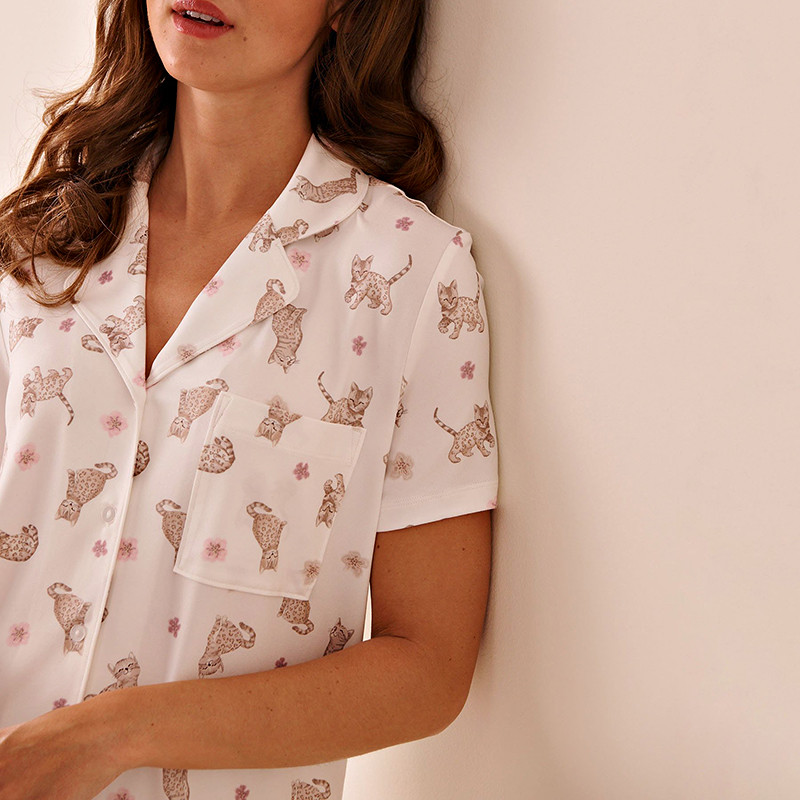
To compare suppliers on real numbers, start from our Custom Loungewear Manufacturer service page.
About MinCharm's Loungewear Production Line
MinCharm has developed and manufactured apparel in Dongguan (Guangdong) since 2014, with its own factory plus a Specialized Manufacturing Network for collaborative capacity. On loungewear, we execute your Tech Pack to the golden sample, setting fabric composition, GSM, and pattern to your spec and re-verifying on bulk fabric — so the quote you approve is the cost you receive.
As a factory-direct loungewear manufacturer with our own Dongguan plant, MinCharm offers low-price custom loungewear built on scale (up to 600,000 pcs/month) and bulk fabric sourcing — low price stays paired with the material standard, never traded away from it.
For buyers planning to scale, our Loungewear Sourcing Guide notes: the 1,000 pcs/style/color standard minimum maintains the material acceptance standard — order volume changes production rhythm, not the standard we measure against. Content compiled by the MinCharm content team for brand and sourcing decision reference.
What should I send to get an accurate loungewear quote?
Send a complete RFQ brief: Tech Pack (composition, GSM, size chart, construction, trim), order shape (styles × colors × quantities), decoration placement and count, trade term (FOB Shenzhen), required certs, and a target price band. A loungewear manufacturer quotes tightly only when the variables are named — a vague "make it soft" produces a vague, risky number.
Why do two supplier quotes look so different?
Usually because the brief was incomplete or the trade terms differ. Normalize both to the same term — FOB to FOB, or landed to landed — then read each line (fabric, decoration, inspection, FOB point). A missing line is not a lower price; it is a cost deferred to your PO or your returns pile.
How long does sampling take before bulk?
MinCharm's standard sampling takes 7–10 days, and the sampling fee is typically deductible or refundable once bulk reaches the agreed volume. Treat the proto and golden sample as the written acceptance baseline — the quote only means something once it is attached to a confirmed reference.
Is a very cheap quote a red flag?
Not always, but a cheap quote with missing lines is. Real low price comes from owning the factory and returning mill margins, not from cutting the material standard. Watch for no factory identity, unnamed fabric (no GSM), no cert scope, or FOB unspecified — those are the lines that become your hidden cost.
How do I lock the price across reorders?
Write fabric composition, GSM, decoration, AQL 2.5 + 100% inspection, FOB Shenzhen, and 50% deposit / balance-before-shipment terms into the PO, and reference the golden sample by ID. MinCharm flags any material change before cutting the repeat run, so your bulk order pricing stays predictable across seasons rather than re-quoted each time.
What does FOB Shenzhen include?
FOB Shenzhen means the quoted price covers goods delivered to the Shenzhen port, with booking and insurance following FOB practice and defined in the contract. It does not include ocean freight, destination duties, or last-mile delivery — those are your forwarder's lines. Always compare quotes on the same trade term.
Can I negotiate the price without losing quality?
Yes — tune, don't trade down. Lower GSM within reason, simplify decoration, or consolidate trim buys across styles to move cost without touching the material acceptance bar. The 1,000 pcs/style/color MOQ exists to keep that standard consistent, so price cuts do not become quality cuts.
What is the minimum order for custom loungewear?
MinCharm's standard is 1,000 pcs per style/color. This MOQ stabilizes fabric and process costs and holds the material acceptance standard across the run; below it, mill and trim setup premiums push the unit cost up. Plan each color as a full first run rather than splitting small quantities across many colors.
Before your next inquiry, send MinCharm your RFQ brief using the ten-field template above and let us return an itemized, factory-direct low-price loungewear quote — fabric, make, decoration, sampling, and FOB Shenzhen as separate lines — so the price you approve is the price you receive, reorder after reorder.
Request a QuoteContact: Tel +86 13712870144 | WhatsApp 8613712870144 | Address: No.2 Road of Industrial Zone 12, Dongguan City, Guangdong Province, China