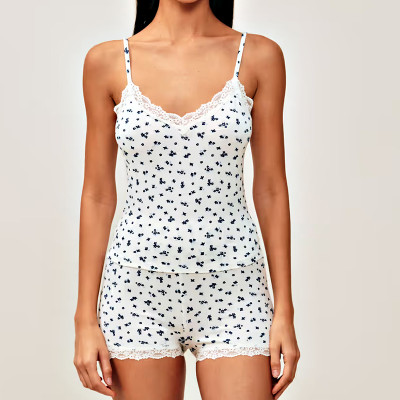
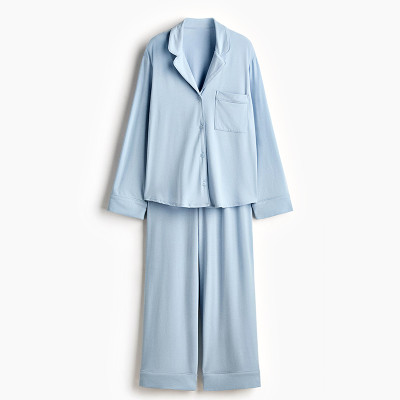
Upper-body fit and movement
- Shoulder position and arm mobility
- Neckline shape, opening, and coverage
- Chest, body, and overall ease
- Sleeve length, width, and cuff comfort
- Body length and hem position

When reviewing a sleepwear sample, brands should check whether the garment matches the agreed measurement chart and provides the intended ease, coverage, movement, and comfort. The review should cover both measurable dimensions and how the garment fits and moves in the intended base size.
Not every fit point applies to every sleepwear style, so the checklist should be adjusted for pajama sets, sleep shirts, nightgowns, robes, or other designs.
Review drape, stretch, opacity, seam feel, and how the weight or placement of trims affects the garment during fitting. A fabric with different stretch or drape can change the perceived fit even when garment measurements are unchanged.
Compare the physical sample with the agreed size chart and measurement tolerances. Where appropriate, evaluate the garment during a fitting or wear check rather than approving it only from flat measurements or photographs.
Record fit, measurement, construction, fabric, and comfort observations in one clear review.
Revise affected measurements, tolerances, or construction notes so the written requirements reflect the agreed changes.
For MinCharm projects, the approved physical sample and confirmed written specifications should represent the same final requirements before bulk production.
Final fit criteria depend on the sleepwear style, selected fabric, target sizing, and intended market. These approved references then guide bulk production and quality control.