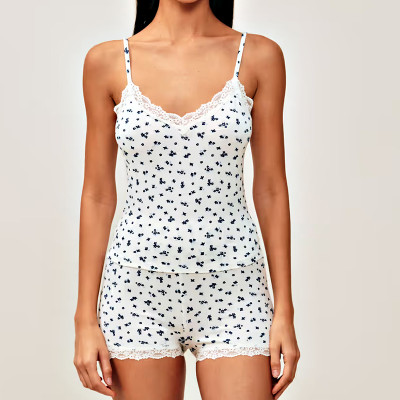
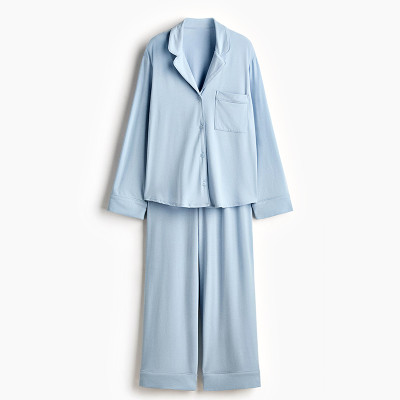
Hand feel and skin contact
Assess both sides of the fabric for softness, smoothness, surface texture, stiffness, and any areas that may feel rough against the skin. Finishes can change how the same base fabric feels.

Brands should evaluate sleepwear fabric by combining measurable specifications with physical assessment. Review softness and hand feel, weight and coverage, stretch and recovery, drape, breathability or thermal feel, and how the material behaves in the intended garment shape.
A fabric swatch can help shortlist options, but the garment sample should be used to judge the final relationship between the fabric, silhouette, construction, and intended fit before bulk production.
Assess both sides of the fabric for softness, smoothness, surface texture, stiffness, and any areas that may feel rough against the skin. Finishes can change how the same base fabric feels.
Review fabric weight or GSM together with opacity, warmth, and the intended season. A numerical weight alone does not show how much coverage or body the finished garment will have.
Check whether the fabric falls, folds, and moves in the way the design requires. A fluid nightgown, structured pajama set, and relaxed robe may need different levels of drape and body.
Confirm the direction and degree of stretch, then observe whether the material returns to shape. Stretch should be considered together with pattern dimensions and the intended ease.
Consider airflow, moisture comfort, warmth, and the target climate. Softness does not by itself prove breathability, so critical performance requirements should be defined with an agreed evaluation method.
Where relevant, review how color, printing, brushing, washing, or other finishes affect the surface and drape. Required shrinkage, appearance, or care-performance criteria should be agreed separately.
Review available options against the requested composition, weight, color, finish, hand feel, stretch, and reference material.
Evaluate the selected fabric in the actual pajama set, sleep shirt, nightgown, or robe because pattern shape and construction affect the result.
Confirm the approved swatch or sample and the agreed fabric specifications, color, finish, and any project-specific performance criteria before bulk production.
Fabric hand feel and drape contain a subjective element and may also change with color, dye lot, finishing, and garment construction. For MinCharm projects, available fabric options can be reviewed during development, with the selected swatch and garment sample used as approval references for bulk production within the agreed specifications and tolerances.
Discuss Your Sleepwear Fabric